
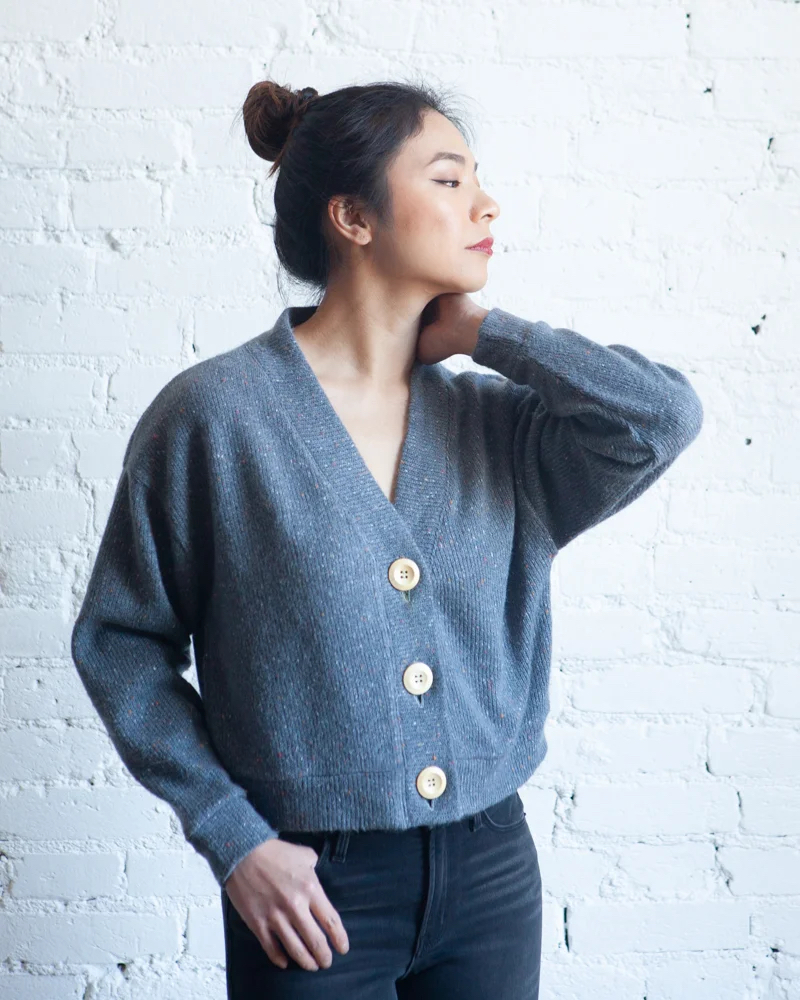
Yes, I know, the True Bias Marlo Sweater has been out for an age. When I first got my hands on it (a few years ago now) I made several versions, none of which quite hit the mark. In the spirit of slow and reflective sewing, I reckon enough dust has settled on this particular escapade to give a fair and accurate review of what went wrong and whether it’s worth one final attempt…
The pattern
I bought the Marlo pattern on a whim. It looked like every cardy I’d seen a friend in that Autumn – a generously proportioned drop-shoulder sweater with deep V-neck, wide bands and large buttons. Rather than faffing around trying to recreate the look, I thought I’d have someone else do the donkey work for me. Thanking you, True Bias.
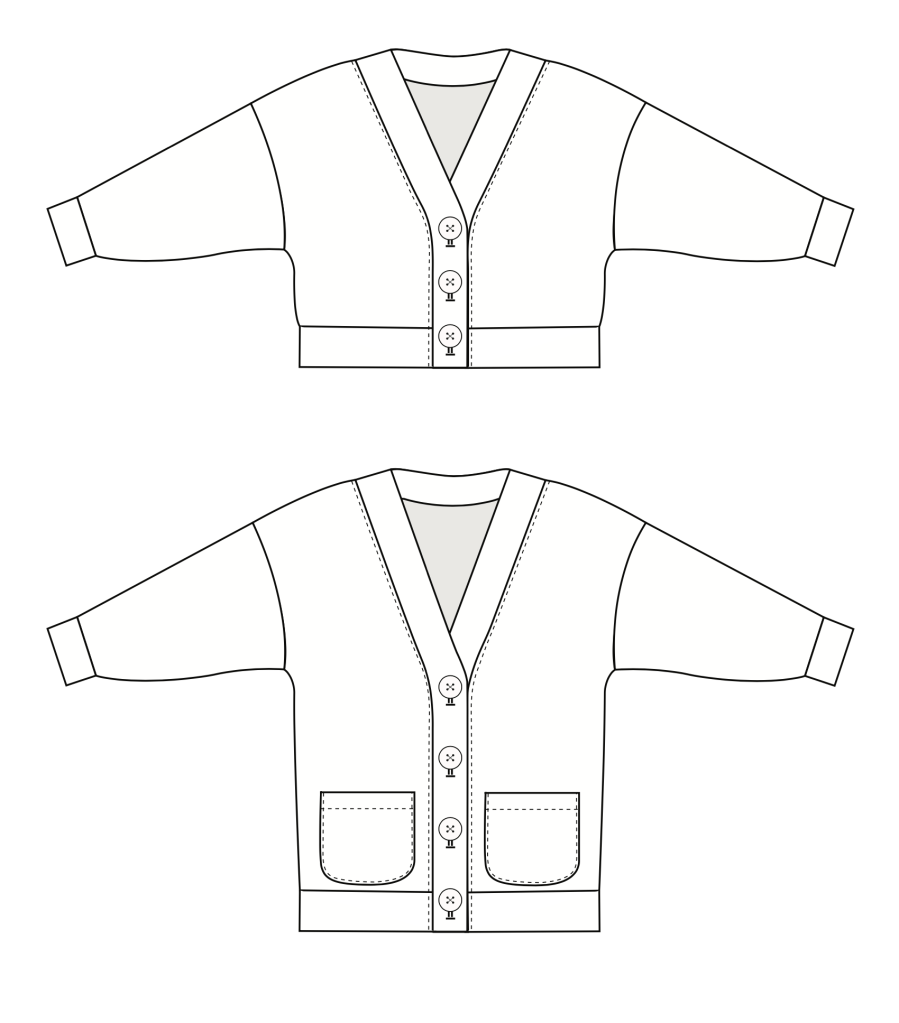
The pattern is well-drafted and easy to follow. Once your pieces are cut out it comes together very quickly – mostly sewn on an overlocker. There are two ways to finish the insides – the beginner’s technique is overlocking bands and body in one go which lends a neat finish worthy of any high street store. The ‘intermediate’ technique, which involves sewing one edge of the band RST with the body and then finishing the other side WST with topstitching, gives a more polished look.
A nice bonus is the inclusion of two separate pattern pieces for the bands – one for fabric with 20 per cent stretch and another for fabric with 40 per cent stretch. This means you can decide which length of band is appropriate for your chosen fabric and sew it up with relative confidence.
Of course, buying a pattern – even a really well drafted easy-to-follow number – doesn’t always get you off the hook when it comes to graft. As it turned out, I would have plenty of work ahead of me trying to figure out how to make the Marlo work for me.
Marlo #1
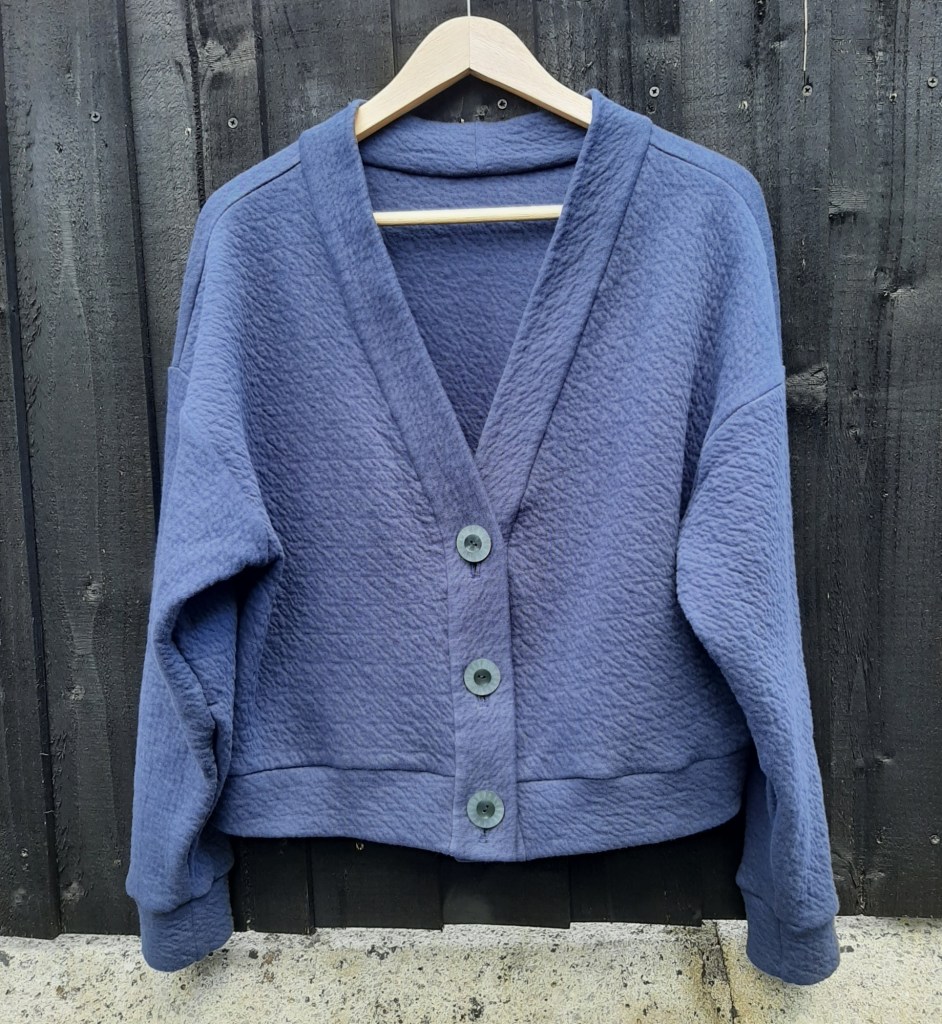
I made my first version (pictured above) in a double face sweater knit – a 100% cotton textured fabric with just about enough stretch (or so I thought) for the Marlo Sweater’s front and lower bands.
Despite being lovely and soft, this was not a great fabric choice. It had neither enough stretch or recovery, and an issue with my overlocker led to a wavy seam that wouldn’t steam or wash out. Having made the pattern up as a wearable toile without any alterations, it was hard to tell if the gaping neckline and the back that kept riding up was due to the stretched out seams or a fitting issue. Needless to say, it ended up consigned to the refashion pile.
Marlo #2
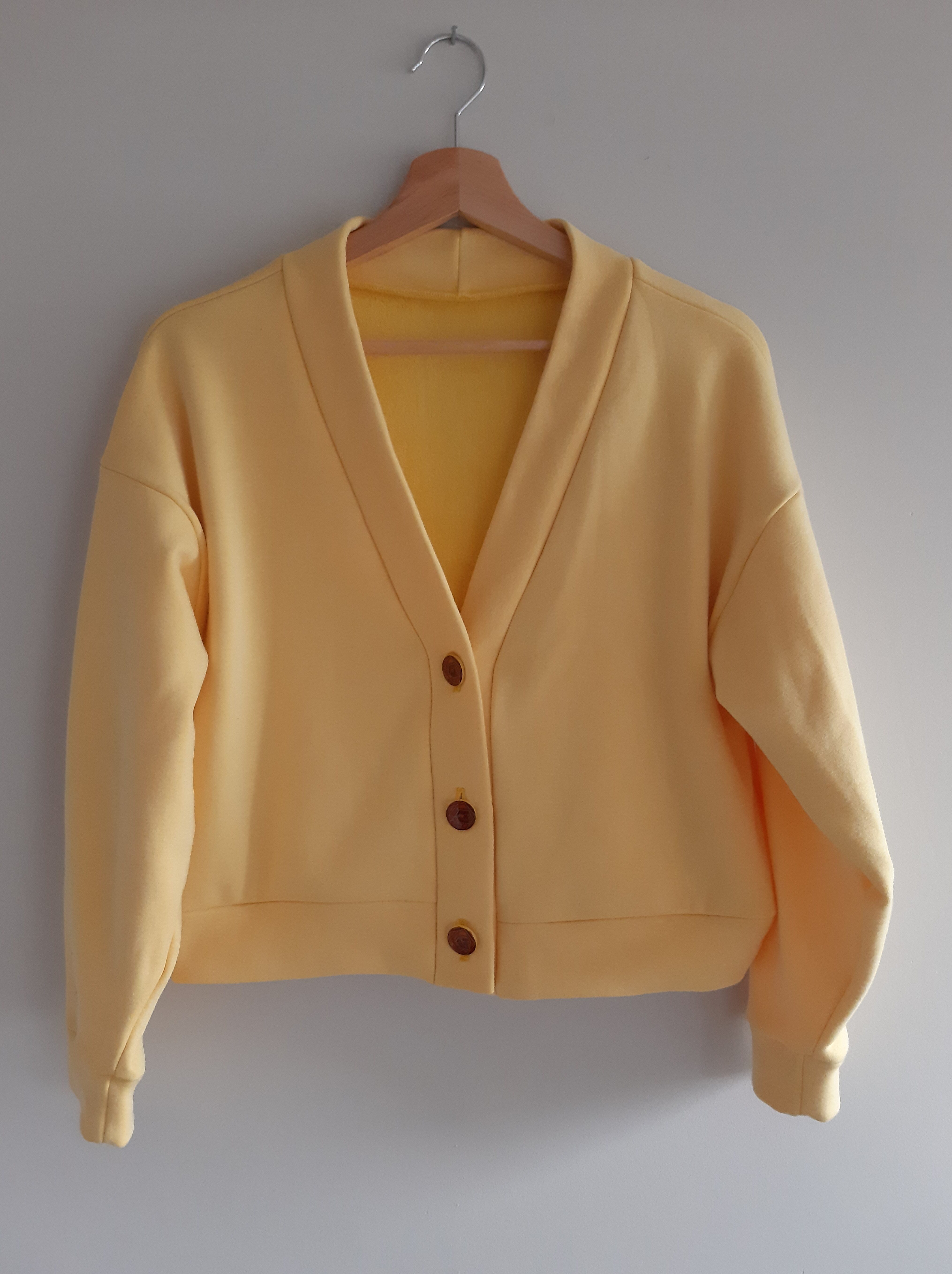
With Marlo #1 in the recycling, I was reluctant to risk any more fabric on the next run. Luckily, I had about a metre of this lemon sweatshirting left over from a previous make for the kids, so I set to work.
Because of the first version’s wavyness, I’d put fitting issues down to the overlocking disaster and went ahead without any modifications. Not the best plan. This stable and bouncy knit highlighted the error clear as day: it still flapped out at the back and didn’t sit comfortably at the neck. This one made it into the (back of the) wardrobe but it was back to the drawing board with the pattern. The next version would have to involve alterations.
Marlo #3
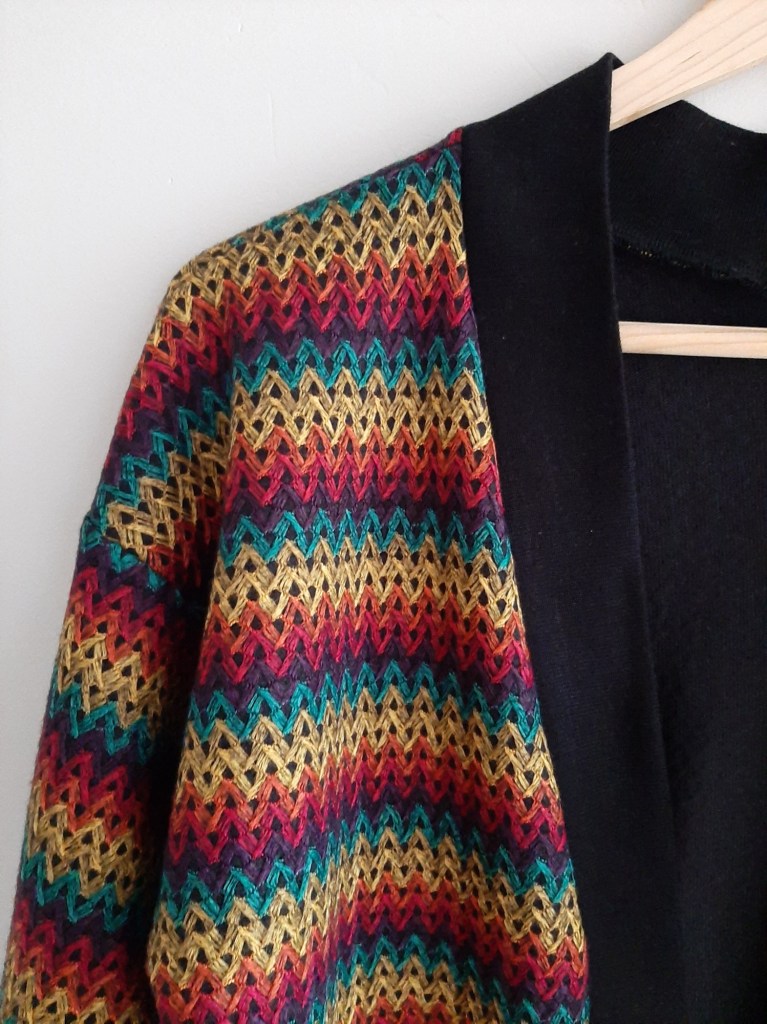
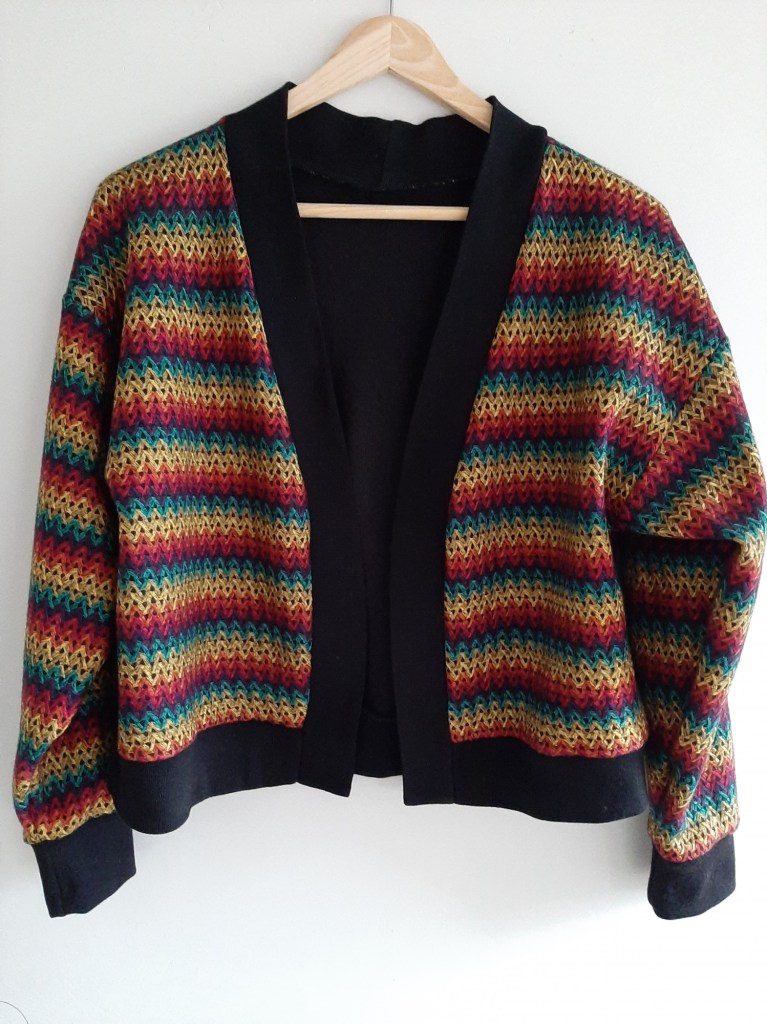
By the time I got round to my third Marlo, in this unusual rainbow knit, I thought I’d identified the necessary tweaks. I made a size 6, but took about 1 inch from the centre back (by folding the pattern back and cutting on the fold). I took the same amount from the centre back of both neck and waistbands to accommodate the edit.
This version fitted much better around the neck and at the small of the waist – falling neatly down rather than jutting out awkwardly at the back. But it was still super cropped and, I was forced to admit, having taken so much out of the back, had lost its oversized feel. Luckily my niece took a fancy to it so it found a new home. Despite feeling like I was being slowly beaten by this pattern, this made it feel like a bit of a win.
Marlo #4
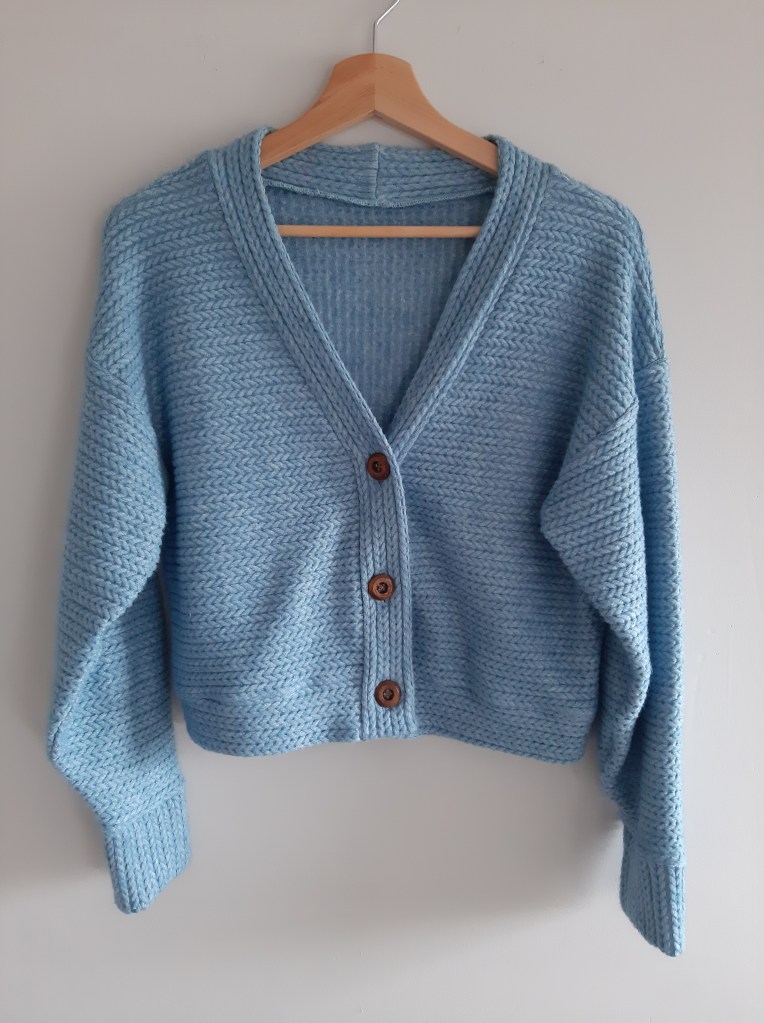
So, three Marlos under my belt and only one in my wardrobe – would I dare venture out to make another? Of course I would. This time I mopped up remnants from a gorgeous pale blue luxe faux angora knit I’d used to make a sweater for Love Sewing magazine.
I couldn’t fit my usual size on to the oddly shaped leftovers, but by tracing out a smaller size and engaging with a little pattern tetris (made trickier by the directional weave and stretch), I managed to get all of it cut out.
This cardy doesn’t tick any of the big voluminous boxes the Marlo aims at. It’s a snug fit and works best with a handful of items: baggy high waisted trousers, jeans and skirts. Still, it works, and I’ve managed to get a reasonable amount of wear out of it – which, for a remnant, is pretty good going in my book.
Marlo #5?
At this point I decided to take a break from old Marlo face. The nagging doubt that the issue is the neckline remained: I prefer a cardy that is snug around the neck. The fact miniature version #4 ticked that box made me wonder if, on the normal sized versions, I’m inadvertently tugging the cardigan higher than it is intended and this is causing the gaping at the back. If so, that’s a bit more of a redraft than I bargained for.
While I still love the look of the pattern, I wasn’t sure how much more fabric I wanted to expend on the exercise of finding one that works for me. An effort to sew more intentionally (I’ve written about this here) also deterred me from continuing to grapple with it.
Now, three years on, I’m ready to revisit the Marlo afresh – with a few caveats: take some time over the pattern alterations and not be in such a rush to get it made; pick an everyday fabric I’d actually want to wear (something robust and easy to sew with – a heavy French Terry would be ideal); and not to sweat it too much if it doesn’t work – not every pattern is for everyone. Sometimes you just have to know when it’s time to move on.
I will report back if Marlo #5 materialises, but, in the meantime, if you’ve made a Marlo I would LOVE to know how you got on with it and if you have any tips for fitting. Did you get the gaping back or neck? Did you easily remedy it? Please let me know in the comments!
Please note some links in this article use affiliate marketing. This means if you click on the link and proceed to purchase, Grinlow Studio will receive a small commission. There is no hidden cost to the consumer for using this link, but the small rewards help keep the website going – thank you for your support!

 Grinlow Studio
2 thoughts on “Pattern review: True Bias Marlo Sweater”