
Until fairly recently, menopause was politely called ‘the change’ and, where possible, stoically endured in silence. Thanks to high profile campaigns, we are finally beginning to talk more openly about the impact menopause and perimenopause can have on a woman’s life. But what effect does it have on our creativity? We talked to three inspiring sewists – Nikki, Charlotte and Rachel – for whom the change has provided both challenge and new direction to find out.
Fogs, flushes and fatigue
If you’ve already embarked on perimenopause or menopause, you will be no stranger to the long list of irritating symptoms that come along for the ride – hot flushes, brain fog, muscle ache, mood swings and fatigue are just some of the most common offenders.
For those of us with creative interests, these changes, which can turn our lives upside down and inside out seemingly overnight, can throw our drive to make into stark relief: while we know from experience that our creative pursuits provide huge rewards, the motivation to get started can be hard to muster.
As leading menopause specialist Dr Louise Newson explains: “The low levels of oestrogen and testosterone that occur during the perimenopause and menopause can adversely affect how your brain works. Symptoms of low mood, reduced motivation and less interest in activities can be common. Many women find that their concentration, energy and stamina reduce. Also, many women find that they become less artistic and creative without their hormones.”

This was the case for Nikki: “My sew-jo has fluctuated during perimenopause – this has often been due to tiredness and lethargy, but also a lack of confidence in my style and body shape. I have definitely lost some self-confidence as my perimenopause has taken hold.”
Charlotte agrees: “Brain fog has also been an issue sometimes when I simply can’t get my head around what I’m supposed to be doing, or I can’t understand the instructions because I’m too tired.”
Nurturing creativity
While there are practical medical solutions to the hormonal imbalances taking place in our bodies (see advice from Dr Newson below), it can take time to return to equilibrium. But as Nikki, Charlotte and Rachel explain, there are ways to work around symptoms.
When sewing itself wasn’t on the menu, Nikki found other ways to keep in touch with her creative passion without pushing against a brick wall: “I don’t try to fight the feelings, just doing what feels right at the time. I have often tidied up or cleaned my sewing room when I haven’t felt like making anything. I find preparing my space or just taking projects one step at a time can help a lot.”
Sometimes switching between creative pursuits can also help. Rachel found her need to be creative all the more important during the change: “I found myself returning to tactile practices I hadn’t done in years. A blend of sewing, drawing and writing helped me feel calmer, and that I was moving forward in my creative life when in other ways I felt like I didn’t know what was going on!”
Nikki, who found the soothing repetition of quilting a tonic when all other sewing tasks seemed too much, says: “My advice is to sew what makes you happy! If you can’t find the energy to sew clothes, maybe try sewing something different other than dressmaking. Or try some organising and planning to keep you interested in your hobby until your sew-jo returns.”
“ My me-made wardrobe is a kind of evolving time capsule for how I’m making my way through this stage of my life”
Rachel
When the sew-jo returns, sewing can be a surprisingly manageable activity. Rachel describes sewing as her ‘companion during restless and broken nights’ and a ‘soothing’ channel for agitation and restlessness. The step-by-step process of sewing means you can pick up where you left off, with the structure of the instructions acting as a gentle aide de memoir. Rachel recommends keeping notes and photos of new techniques to jog the memory. “I’ve learned to be kind to myself,” she says.
Charlotte has a similar approach: “I get around that [brain fog] either by working with patterns I’ve used several times before or only working for small amounts of time so that I’m not pushing myself too hard.”
Taking it slow and going easy on yourself is a great way of nurturing creativity. And, in some ways, it teaches us to value those creative impulses all the more when they arrive. As Nikki says: “When I want to sew, I just go for it now. It is definitely my me-time, and my family knows how important this is to me.”
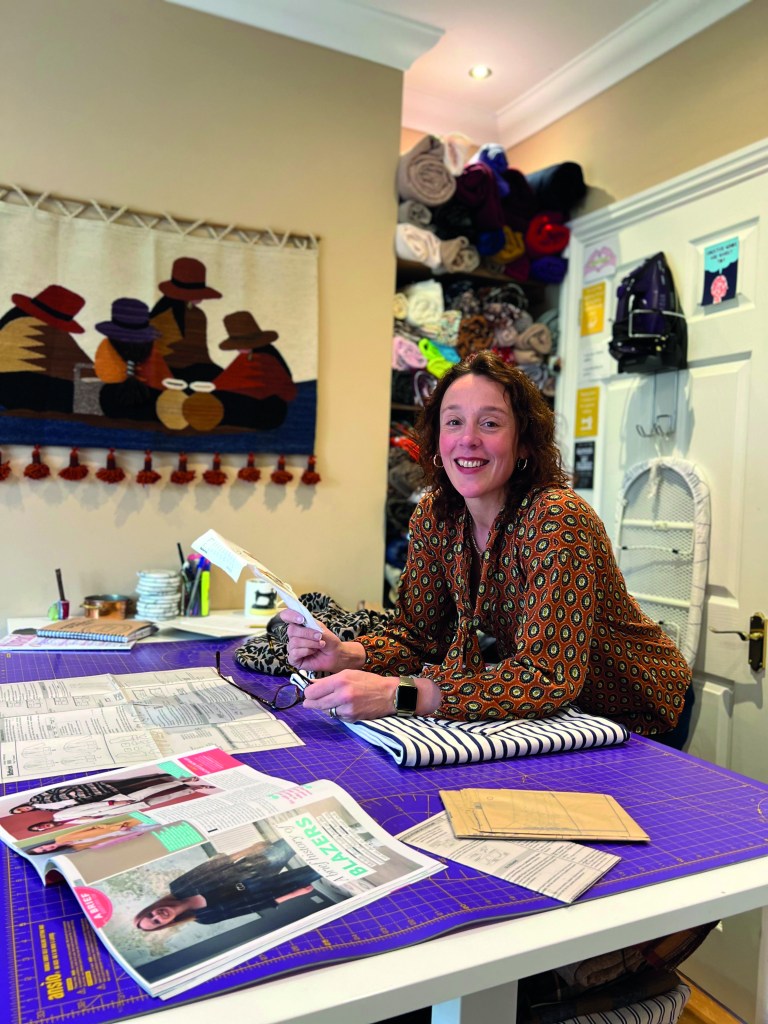
Taking control
Sewing provides a sense of control to women going through the change in a way that other crafts may not. We gain a sense of self-efficacy through creating, and our endeavours have practical benefits. As Rachel says: “We can sew to honour our changing shape when our body image may be hitting a low and make clothes in natural fabrics to help us cope with hot flashes, and sew using colours and styles we wouldn’t find in the shops. Sewing and crafting time is like my little prayer of self-care.”
The clothes we produce also create a visual record of our journey. As Rachel puts it: “My me-made wardrobe is a kind of evolving time capsule for how I’m making my way through this stage of my life – in both senses of the word.”
Charlotte agrees: “Sewing has massively helped me during menopause because it has shifted my focus away from the sense that my body has somehow let me down to making me think of it as a canvas on which to showcase the garments I make.”
“Sewing for myself feels like a small act of rebellion, in which I am reclaiming my own value”
Charlotte
Nikki has taken this a step further by having a big and ‘brutal’ clear out of her wardrobe, passing on items that no longer fit or feel right. “Your wardrobe should make you happy, not make you feel less than you are!” She says. “I still want to be fashion-forward in how I dress, but unfortunately the high street doesn’t cater for the changes my body is going through.”
And, of course, this is where sewing comes in very handy. Charlotte says: “It’s inevitable that our bodies change with menopause, even if it’s only slightly …I am glad that I possess the ability to make my own clothes fit me, rather than relying on what commercial retailers think I should wear.”
Charlotte envisages a time when she will never have to buy ready-to-wear again: “That makes me feel so proud and so independent, which is valuable because society still makes menopausal (and older) women feel not just invisible but valueless. So sewing for myself feels like a small act of rebellion, in which I am reclaiming my value and hopefully encouraging other women to do the same.”
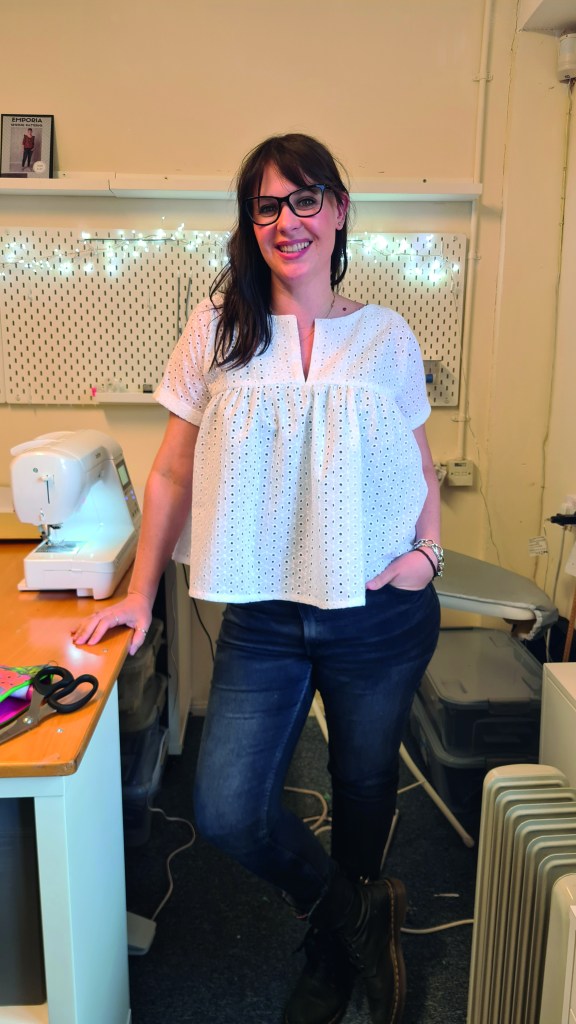
perimenopause
The period of a woman’s life shortly before the occurrence of the menopause. This can begin up to 10 years prior to menopause.
menopauseThe ceasing of menstruation (typically between the ages of 45 and 50). Menopause is diagnosed after 12 months of cessation.
This article first appeared in Love Sewing magazine, issue 107.
Has menopause or perimenopause (or other significant life stage) affected your creativity? Has your making dwindled or soared? Let us know in the comments below!


This is great! As a 50+ year old woman, I think it would be hard for me to take up sewing right now, but I have recently taken up long-stitch… there is something in the repetitiveness of the activity that is calm and soothing… it acts as a form of moving meditation! Linda xx
LikeLike
Thank you Linda! I love the idea of stitching as a meditation. Sewing has so many wonderful properties! Xx
LikeLiked by 1 person
My daughter sews bags and clothes for pleasure… I don’t think I could even thread the machine without my blood pressure sky rocketing! Long stitch on the other hand… that I can do! 🤣
LikeLiked by 1 person
It’s great you’ve found a kind of stitching that works for you – enjoy! x
LikeLiked by 1 person
Thank you lovely – have a wonderful week!
LikeLiked by 1 person
And you!
LikeLiked by 1 person