
We all know sewing is one of the most rewarding hobbies going, providing both utility and creative outlet in one fell swoop. While some of us stumble across sewing later in life, many of us sew because we were encouraged to do so at an early age by a loved one. Like many people, I was taught the rudiments of sewing by my mum, and now my children are showing an interest it’s time to continue the tradition.
Sometimes, though, it’s so long since we learned to sew ourselves, it can be hard to know where to start. The adage about the beginner being a better teacher than the master, because they remember better the act of learning, is especially true for craft – while your mind may be pondering French seams or fabric composition, a beginner simply wants to know how to thread a needle and tie a half-decent knot.
So, with that in mind, here are a few top tips for sewing with kids.
Hands first
While getting cracking on a sewing machine is the best kind of fun, it pays to start off with the basics. A needle (and a fairly large one at that, for younger learners), some thread and a small pile of fabric scraps are all you need to get going.
Sewing with our hands is an indispensable skill which introduces us to the tactile nature of the craft and the sheer magic of joining materials to create something new.
Bites and breaks
When getting started, always make sure there is enough time to have a decent first go, but be prepared for interest to wane when it gets tricky. When it does, either mix things up or take a break – while occasionally children become so engrossed it’s hard to rouse them, most of the time learning in bite size chunks will be easier than relentlessly ploughing through.
Keep it simple
At the same time, don’t create so many chunks it feels like a never-ending enterprise. Don’t overwhelm with too much technical detail too soon – it’s great to feel a sense of achievement by being able to reach the finishing line without having to negotiate too many hurdles along the way – so keep the project simple and manageable. You can always step it up as they become more comfortable with the process.
While the temptation might be to start with clothing – especially for a child fascinated by fashion – a great way to introduce the process behind garment making is to start with a mini project that travels from paper template to finished project in a small number of easy steps.
Light the fire
Most importantly, let them get on with it! William Butler Yeats once said that ‘education is not the filling of a pail but the lighting of a fire’, and this is especially true when teaching a craft. The last thing a child needs is the grown-up grabbing their project and creating a line of neatly executed stitches next to their wandering knotted trail.
The imperfections in a beginner’s work are not only a sign of a road to travel, but also of a commitment to the process, and a desire to investigate and learn. Cherish the wonkyness and encourage them to do the same, they are at the start of a rewarding journey!
What better way to learn how to think than through the problem solving and creative ingenuity required to manipulate fabric into 3D form?
Reach out
My mum taught me to sew and then left me to my own devices to learn at my own pace. But I have since wondered whether I would be as immersed in sewing had I not had that early exposure. The Great British Sewing Bee has created a huge amount of interest in sewing in recent years, and encouraged many people to take up the hobby. But what if everyone got the chance to have an immersive experience with sewing at an early age?
With this in mind, a few years ago I set up a sewing club at my daughter’s school for children aged 8-11. The priority was for it to be entirely free to ensure all children would have the opportunity to try their hand with a needle and thread. When the fabrics are tipped onto the table the children’s expressions are priceless; fabric love is, I am sure, an innate human characteristic…
Setting up an after-school club as a volunteer is not going to be everyone’s cup of tea, but if you are interested in offering young children a chance to have a go at sewing, my advice would be to talk to your headteacher and see what they say. As children progress through school the creative arts have less space in the syllabus, so it may well be that your offer is welcomed (subject to all relevant checks, of course) or that you might be able to help out with a teacher-led class in something similar.
These group sessions are busy, often noisy (though sometimes uncannily silent!). They are not ideal for learning all the nuts and bolts of sewing, but they are enough to spark an interest – and, hopefully, open fresh eyes to the magic of making.
Know the value
Sometimes it’s easy to forget how crucial the creative arts are for human beings. Schooling is so focused on academic skills that the arts and crafts are squeezed out of focus for many young people too early in their lives.
Treating the arts as of lesser value does a huge disservice to us all. The anthropologist Margaret Mead argued that ‘children must be taught how to think, not what to think’. What better way to learn how to think than through the problem solving and creative ingenuity required to manipulate fabric into 3D form? When we teach young people about the path that leads to making the clothes on your own back, their minds become open not only to the process of craft but also to the world around them: how it is made and how to understand it.
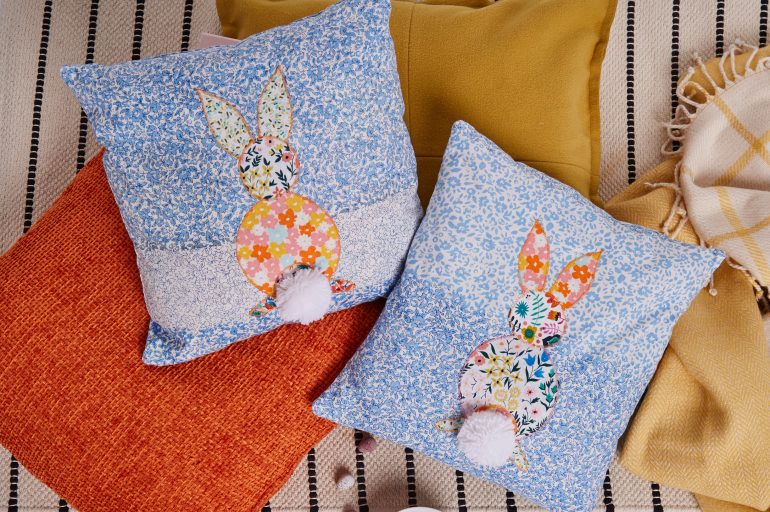
Free pattern!
With Spring underway, why not try sewing these fun cushions with our free Easter bunny applique pattern and tutorial? Click here to download your templates and get started!
Book shelf
If you’re toying with the idea of training up a young person in your life, these books offer great resources for the journey.
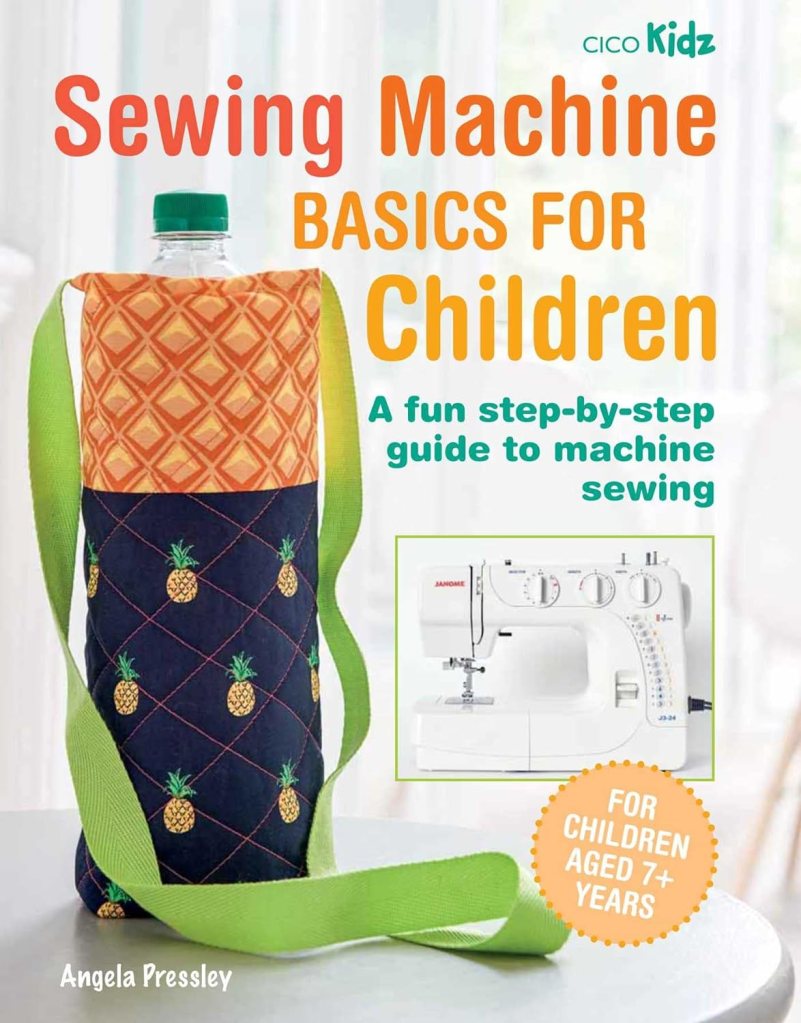
Sewing Machine Basics for Children – A fun step-by-step guide to machine sewing
Angela Pressley
Angela Pressley’s guide to sewing is tailor-made to children aged 7-11 and provides a complete course in machine sewing. Angela, who has taught sewing for many years, knows how to encourage and inspire young people to learn. Starting with the basics, she gradually builds up a portfolio of skills through 30 gorgeous makes.
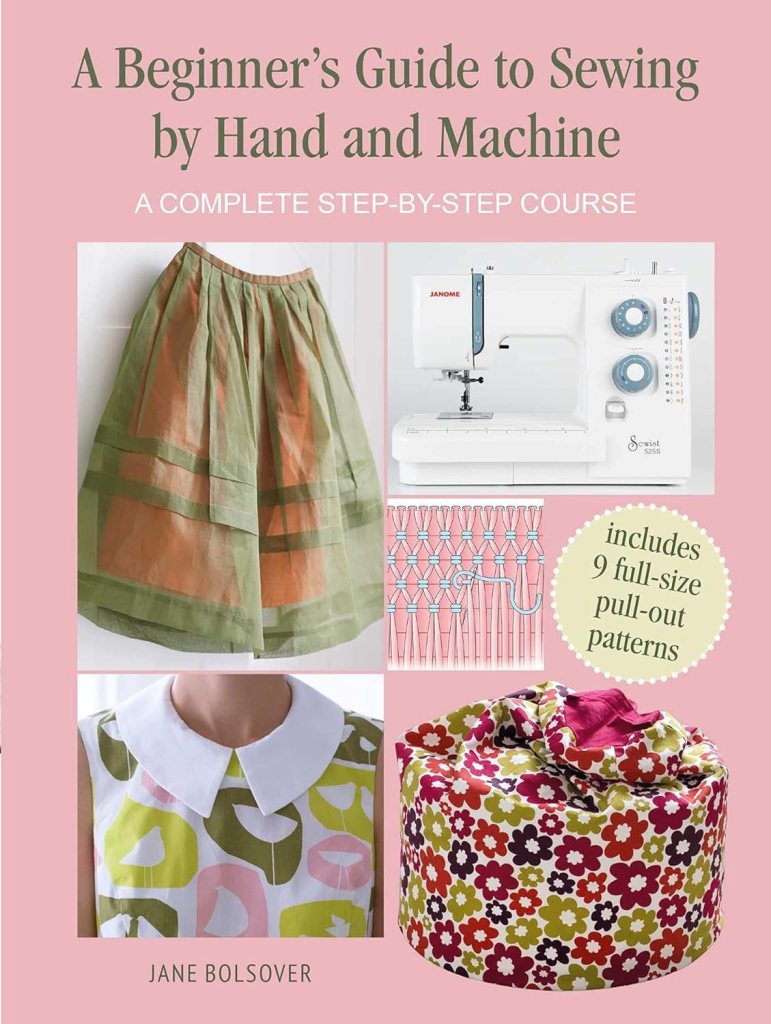
A Beginner’s Guide to Sewing by Hand and Machine – A complete step-by-step course
Jane Bolsover
Jane Bolsover’s book will help you guide younger people through their sewing journey with confidence. From sewing nuts and bolts to a structured course of 12 workshops, which build from the most basic hand-sewing techniques through to more advanced dressmaking skills, this book will have any beginner sewing with confidence in no time.
If you have any favourite resources or tips for sewing with kids – or beginners in general – I’d love to hear about them – please share in the comments below.

 Grinlow Studio