
Following last week’s look at sewing with kids, this week we focus on sewing for them: with the Easter holidays underway, it might be the perfect opportunity to measure up the little’uns for some new homemade clobber.
Big four
If you’re new to sewing clothes for children a great place to get started is with the paper patterns made by what used to be called ‘the big four’ (which now includes a few more brands under the same wing). McCall’s, Simplicity and Burda in particular have a huge range of patterns for kids – all fairly fashion forward and fun.
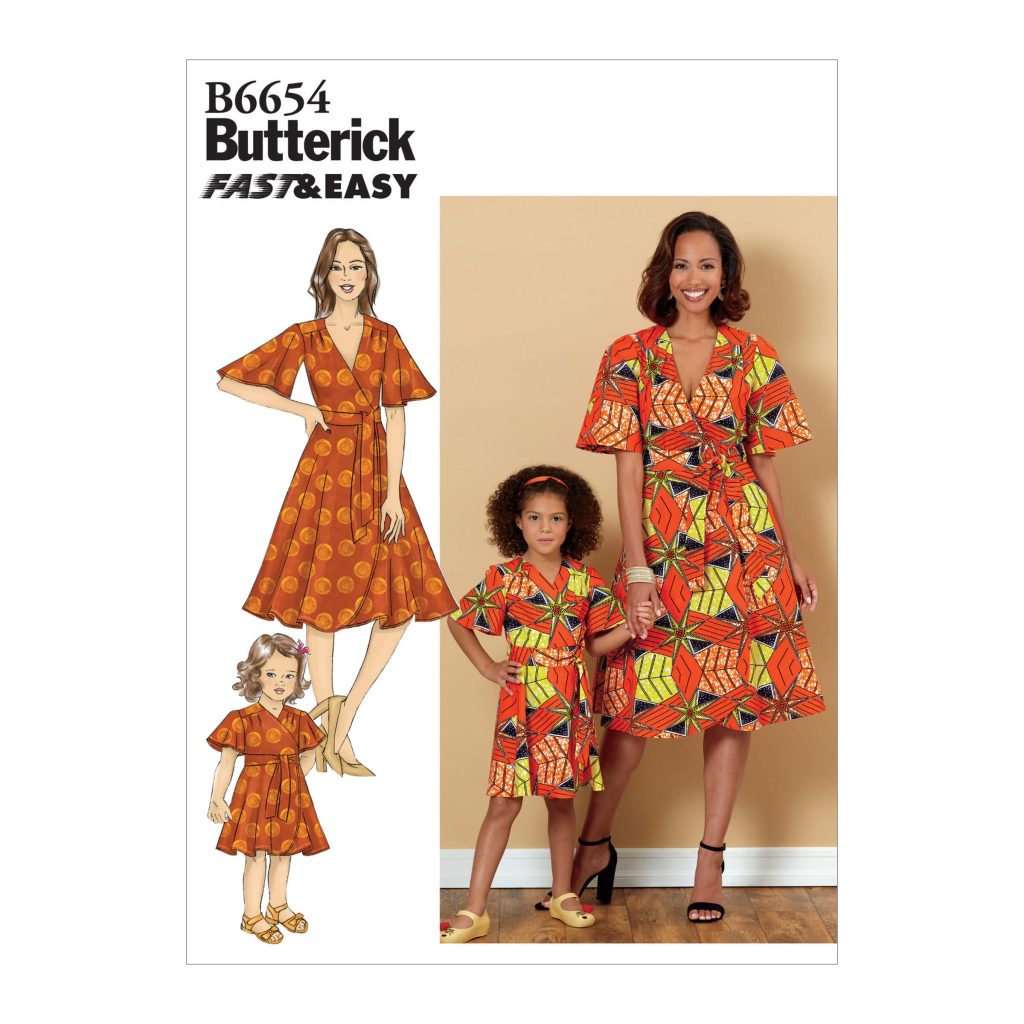
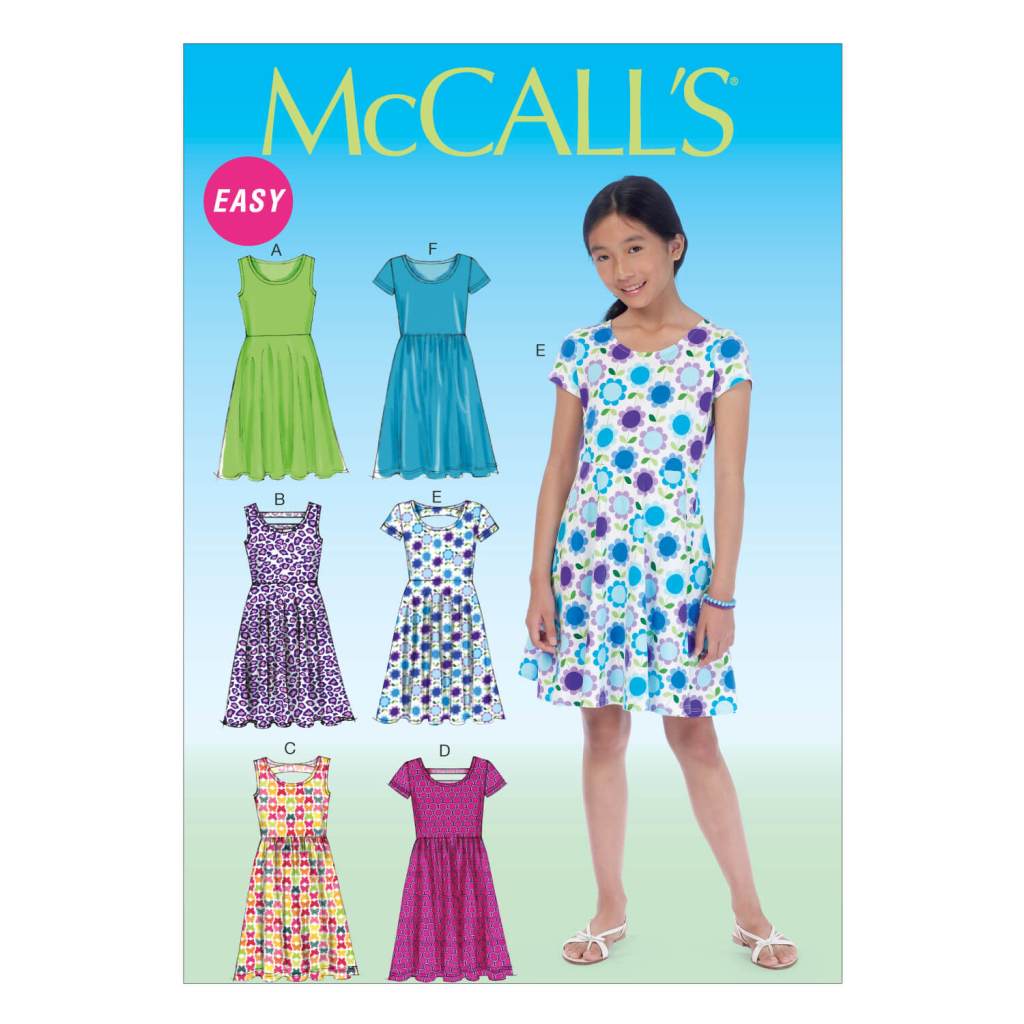
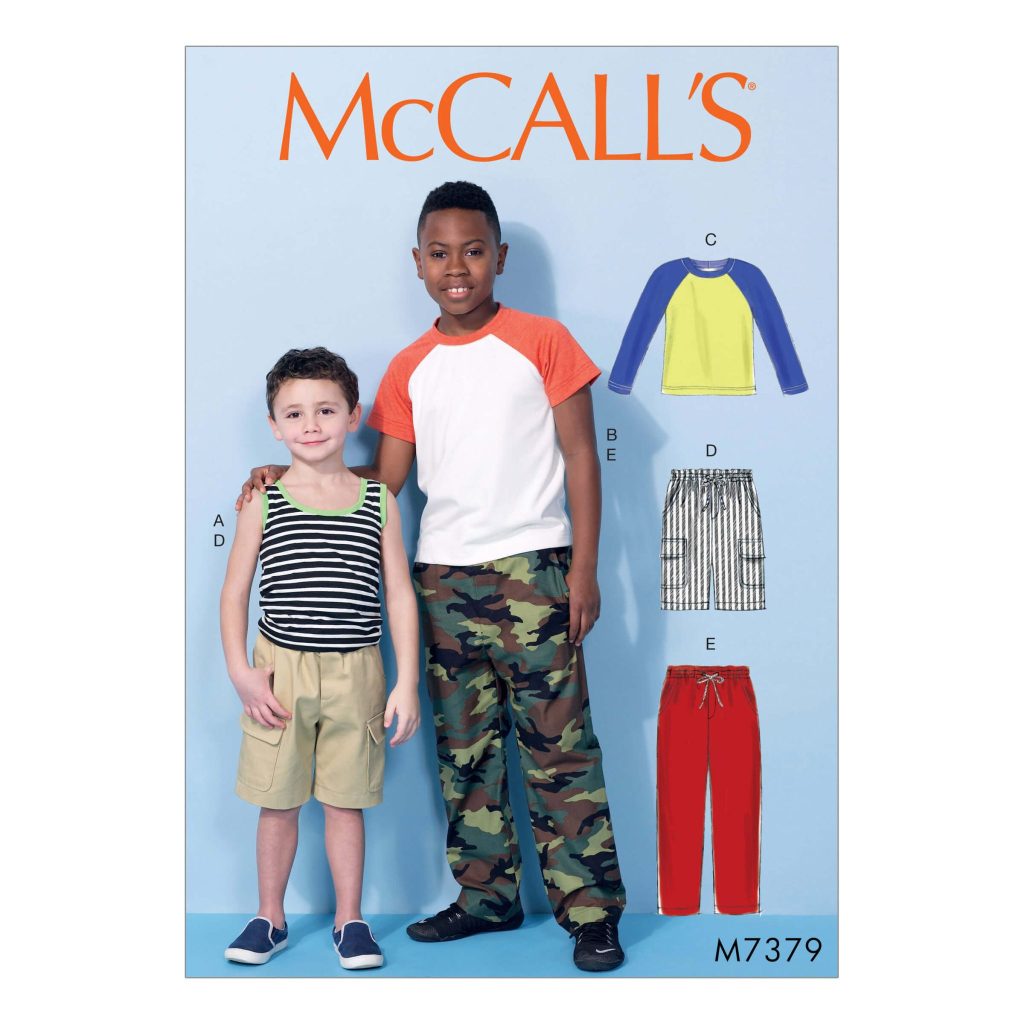
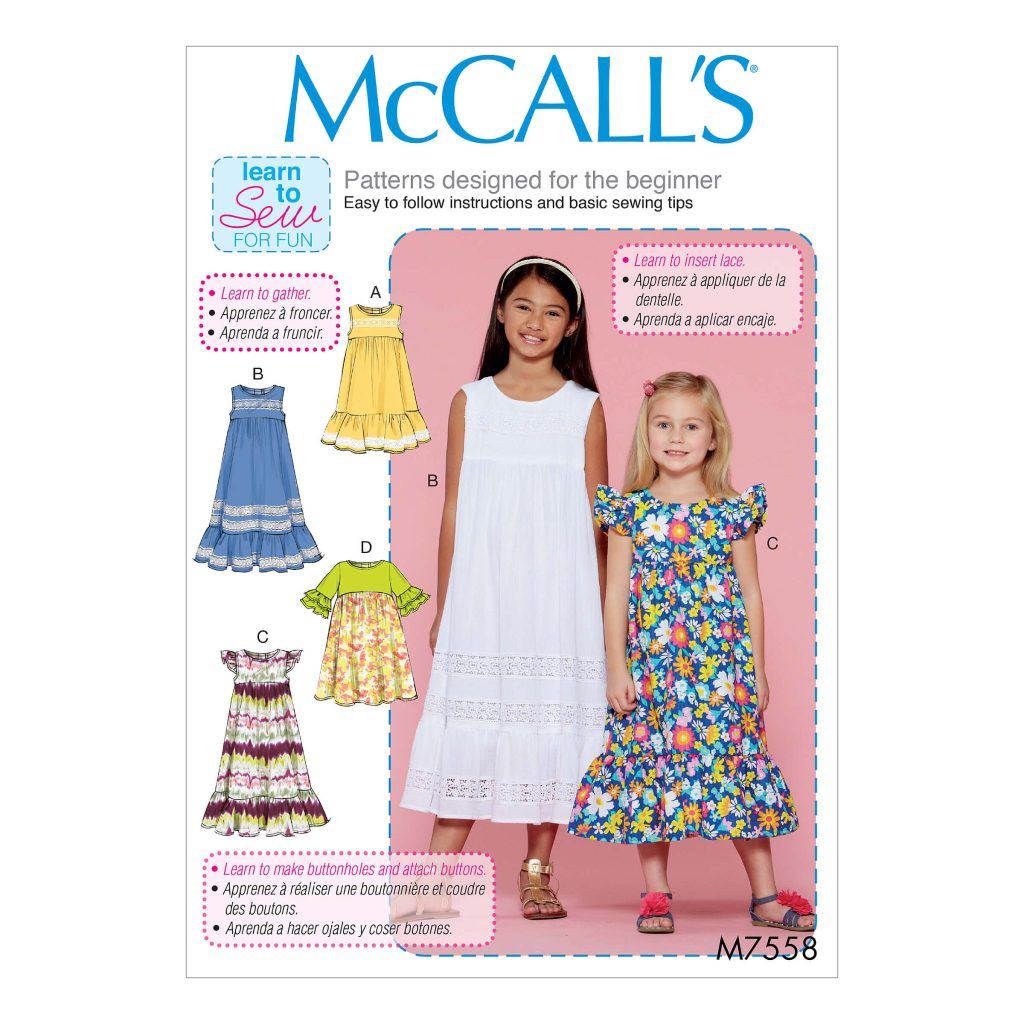
If you’re looking for something dressy, Butterick 6654 is a gorgeous wrap dress with curved hem and flutter sleeves which – bit of a bonus – comes in adult and child size up to age eight. For something summery try McCall’s 7558, a tiered dress with lots of frilly sleeve options. For reliable basics, look no further than McCall’s 7379 – a great staples pattern, with raglan tee, vest and cargo pants – or McCall’s 7079 – a versatile t-shirt dress with seven alternatives in one envelope.
The best shorts pattern I’ve used, possibly ever, is McCall’s 7966. And I’m also partial to McCall’s 7518 – a brilliant onesie pattern for all the family – including the pet dog!
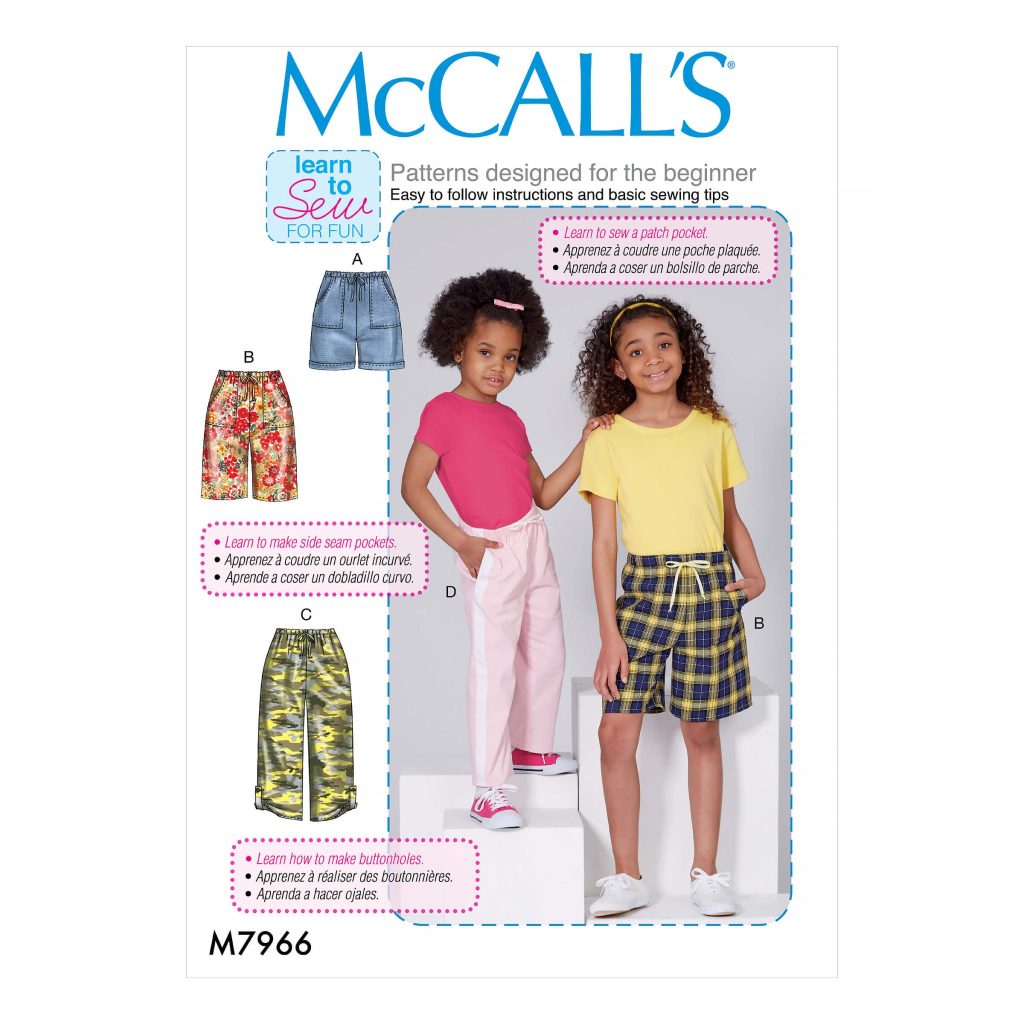
For the full range of children’s patterns visit SewDirect.com.
Fabulous freebies
Another great way to make kids clothes is to look into the mind-boggling array of free sewing patterns online. If you have a printer and don’t mind spending a little time cutting and sticking together PDF patterns (the bonus is patterns for small people take up far fewer sheets of paper), then you can find patterns for almost any garment imaginable online by searching ‘free sewing patterns for kids’.
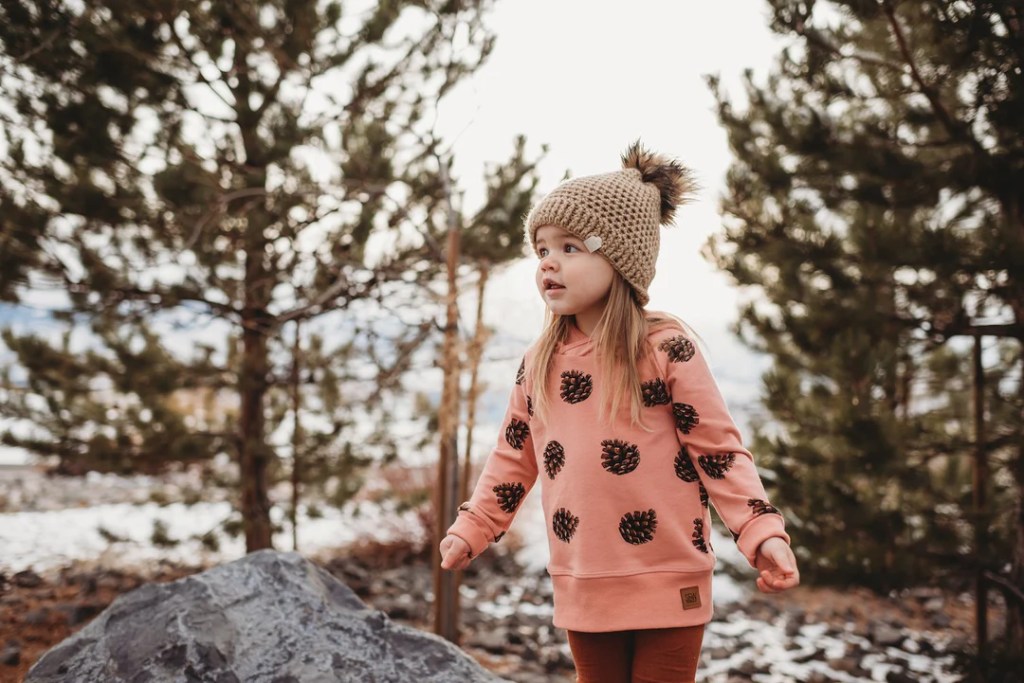
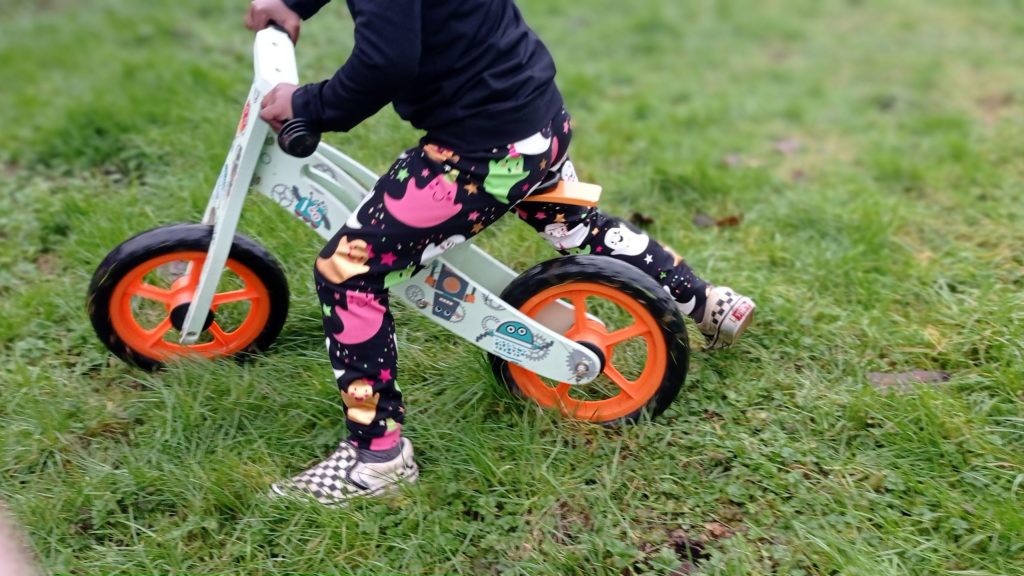
I particularly love the Waves and Wild Lightning Leggings and the Lowland Kids Lowland Hoodie – great patterns with a huge size range (from baby to pre-teen). Both are easy to cut out and sew, and great for batch sewing.
Happy hacking
Once you have a stash of paper patterns, you can have fun creating ‘frankenpatterns’ by mixing and matching features. This is made super easy with a company like McCall’s; the basic block remains the same across patterns, so measurements usually align, making seams and details easy to match.
My daughter loves to draw a picture of a dress and then see how I recreate it. While these days I enjoy drafting patterns from scratch, occasionally I return to the big four for an easier – and quicker – ride, and I’m always grateful for the simplicity it offers as a system for generating new and interesting designs.
Remake and revive
Over the years I have developed quite a pile of unworn homemade clothing. Some of it bodged, some of it a case of wrong pattern or wrong fabric, and some of it just not quite how I thought it would turn out.
As I become more conscious of the wastage involved, I’m more careful about what I sew, but I still make the occasional error of judgement, and that’s when having small people to sew for becomes a handy way to prevent misguided sewing adventures ending up at the recycling plant.
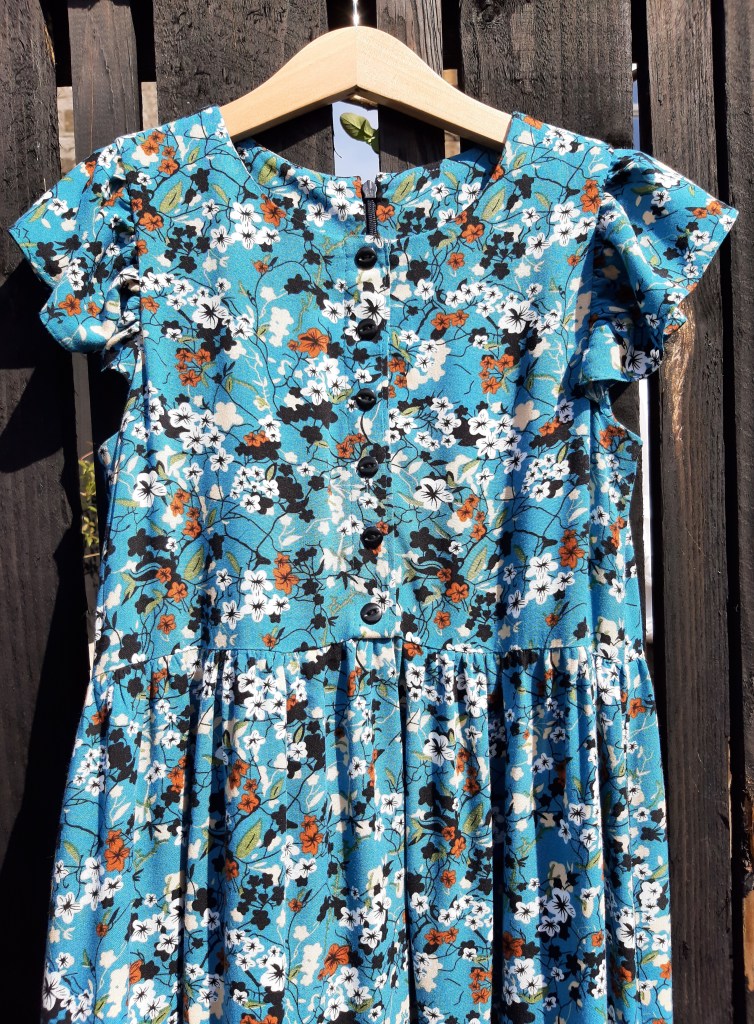
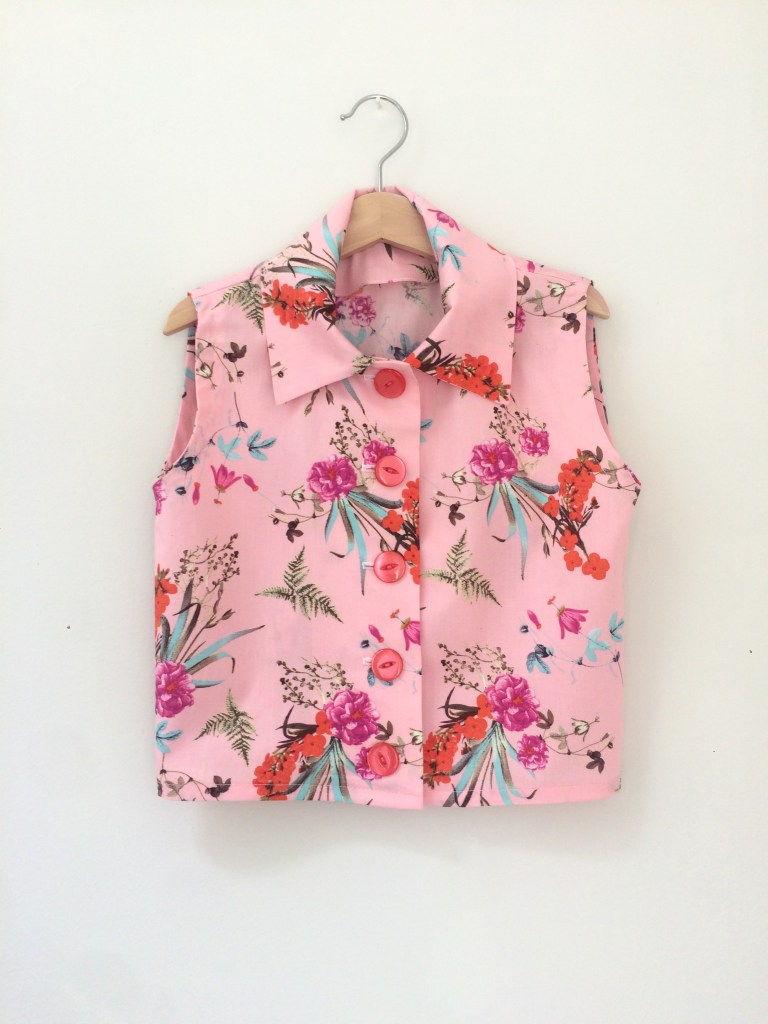
Now, if the garment is good enough to pass on I will usually do that first (subject to the limitations imposed by charity shops – click here to learn more about this), but if not I will take the material and turn it into something for my kids. I’ve been doing this for years, so often I will wear something a few times, realise it’s not quite right, then a few weeks later it will be reincarnated into something tiny and new. This happened to a spotty Tilly and the Buttons pinafore dress, the floral viscose lining of a coat, and a few ill-fitting t-shirts.
Things to bear in mind when redrafting existing clothing into clothes for children, is to be sure of where the grainline lay on the original garment and make sure you stick to that when cutting out new pattern pieces. Sometimes that means a garment that looks as if it will have plenty of fabric is actually not so well-suited to your chosen redesign – so always be sure to try your pattern pieces out before cutting.
Copy cat
Another way to create children’s clothing without patterns is to trace existing garments. This is a great move if a beloved garment no longer fits and you want to recreate something similar. This does involve a little grading up, so is perhaps for the more confident sewer, but there are plenty of tutorials online to help guide the way, and you can always use an existing pattern to get a rough indication of where the grading lines should fall.
I often find that I can just tell by the fit on my child where and how I need to grade up – usually at the sides and in the length for the most part, with ever so slight changes – if anything – around trickier areas such as arm scythes, necklines and crotch curves. If you’re interested in learning more about pattern cutting and design, working on children’s wear is an excellent way to get started.
Multiple magic
If you are at all familiar with the ripped knees in the trousers of particularly active children, then making a spare pair of bottoms will never go amiss. If you have enough fabric it’s always satisfying creating a production line and watching the little pairs pile up.
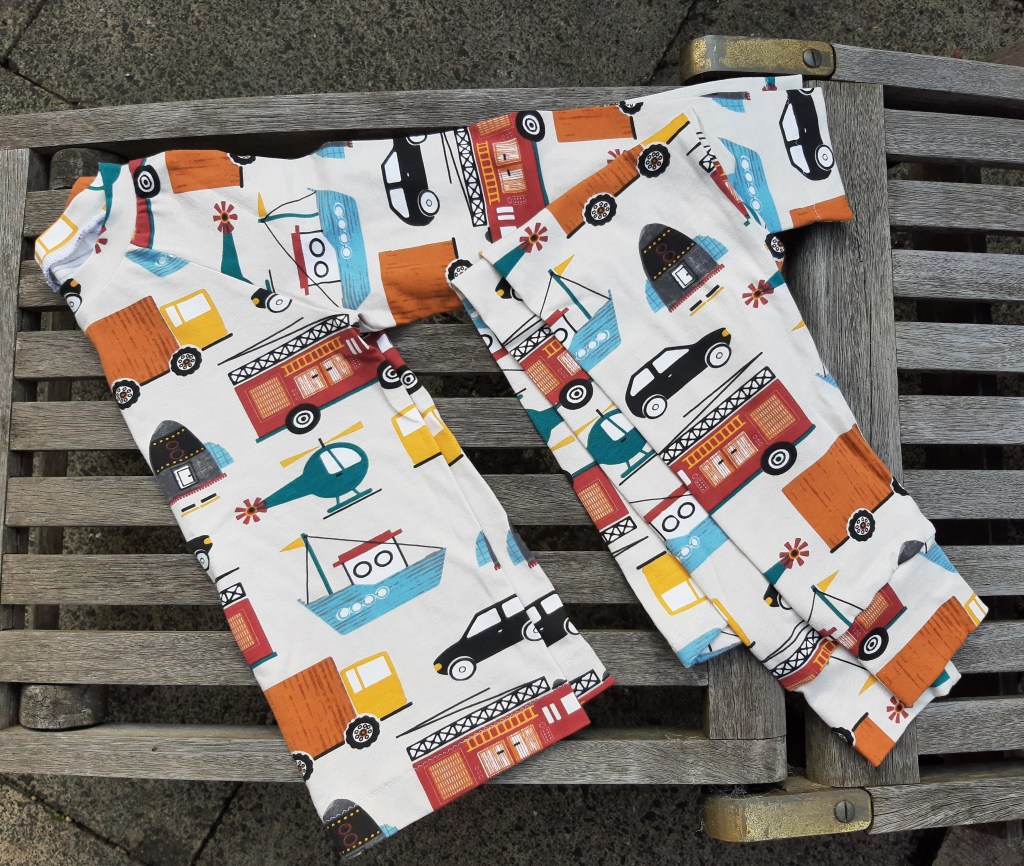
The same goes for other basics – while you have the overlocking thread in situ, it’s always worth getting what you can out of a fabric there and then. When I made my little boy a onesie recently, I cut out a small hat and scarf at the same time and whizzed them up on the overlocker. Super satisfying and useful to boot!
Size matters
Finally, I will close on a cautionary tale. I’ve learned the hard way that factoring in ‘growth’ to sizing choice is a risky business. Sometimes sizing up, while it feels sensible, doesn’t pay. A few years ago I made my then eight-year-old a new dress and opted to trace the age 10 because, I reasoned, she’d get a few summers out of it.
WRONG!
She loved it and danced around the house for about an hour, but didn’t wear it again over the summer. When her age finally caught up with the sizing, she was no longer such a big fan of the fabric. It became a nightdress but still… lesson learned.
My advice would be to go for the right size and, if you really want to err on the side of caution, take a smaller seam allowance (Big 4 kids patterns are usually 5/8” seam allowance which is pretty generous given the scale). It’s nice to see the things we labour over enjoyed. And when they are finally outgrown – inevitable when sewing for children – they can be passed on or reworked into something new.
What are your top tips for sewing for children? Let us know in the comments below!


You have lots of good ideas!
My top tip would be: if possible, let your children choose the fabric, and have a “design discussion” with them. Even take them with you to the fabric shop and let them choose. I find clothes have a much higher wear-rate with their input.
LikeLiked by 1 person
That’s a great tip, Liz – thank you for sharing. It’s brilliant to let them in on the whole process at a young age 🙂
LikeLiked by 1 person