
In a busy design studio in the heart of London, commercial artist Reginald Shipps is about to create one of the most iconic and enduring symbols of the wartime era.
It’s 1941 and Shipps’ label company, Hargreaves, is one of a handful asked to submit designs to the Board of Trade for its latest strategy to help the war effort: Civilian Clothing.
Influenced by futurism, with its celebration of modernity, Shipps hits on the winning formula: two perfectly circular Cs and a neatly triangular 41. With a personal award of £5 from the Board of Trade, Shipps goes back to the drawing board; little does he know that his design, ‘the cheeses’, will go on to make history, become a treasured collectors item, and inspire a new wave of twenty-first century sustainable style.
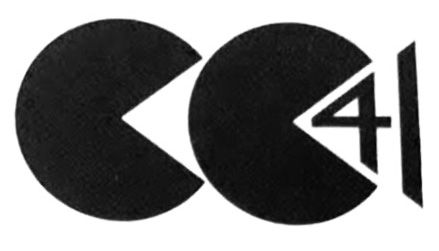
The National Mark
Prioritising the war effort meant shortages for civilians as raw materials were diverted towards military needs. With around one quarter of the population in uniform, there was enormous pressure on textile production. Prices began to rise.
To prevent rampant profiteering, the government stepped in. Prime minister Winston Churchill recognised that centralised control of industry – what he called ‘wartime socialism’ – was the only way to manage finite materials in unprecedented circumstances.
The plan was to provide good quality affordable clothing for all. While the CC initially stood for Civilian Clothing, the label was soon applied to a wide range of consumer goods, from bed linen to furniture, and came to be known as the ‘National Mark’.
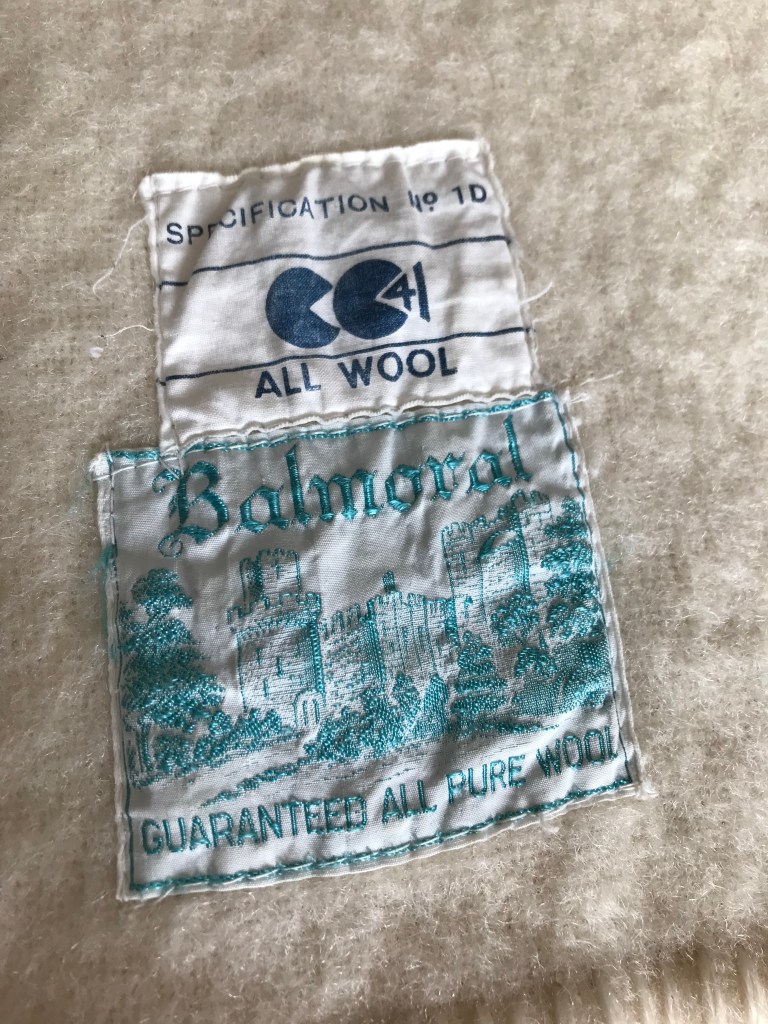
The Utility Scheme didn’t arise in a vacuum. ‘Standard’ cloth for civilians had been rolled out towards the end of the First World War to mediate wartime privations, but manufacturers complained about losses and consumers about poor quality. In the absence of government enforcement, many manufacturers opted out.
When war broke out again, clothes rationing was again under consideration. A raft of legislation paved the way, beginning with the 1939 Prices of Goods Act, through which the Board of Trade fixed prices for, amongst other things, clothes and shoes.
It was a bumpy start. Manufacturers turned to higher end products to maximise profits. In response, the government raised purchase tax, but this hurt the poor. Concerned about the availability of warm winter clothing for the working classes, the Board announced clothes rationing on 1st June 1941.
A long series of orders, overseen by the Directorate of Civilian Clothing, prevented price escalation and ensured compliance. Manufacturers were given a maximum amount they could produce, based on a percentage of pre-war production.
Utility cloth had to be made to exact requirements and stamped to ensure standards. Only once production quotas were met could non-utility be produced. The government controlled prices and profit margins at each stage of manufacture, distribution and retail.
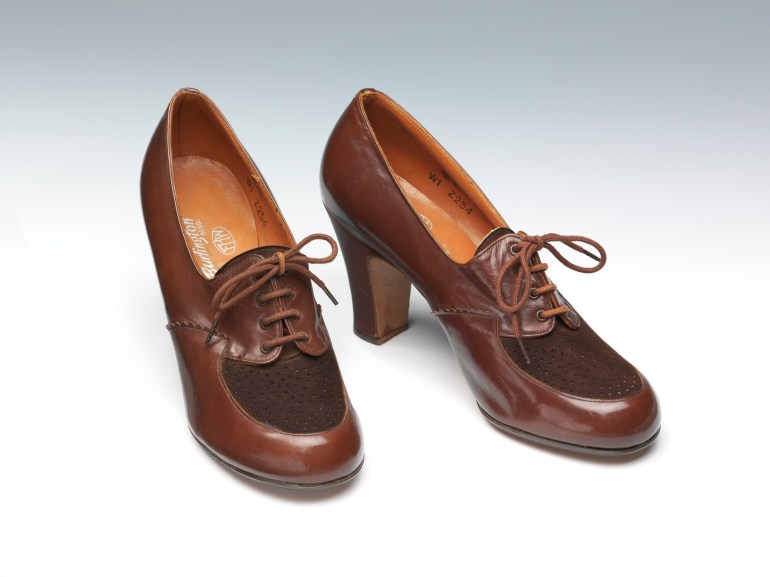
Utility clothing, which was exempt from purchase tax, was rationed through a system of coupons. Each garment type was given a coupon value based on material and labour costs – a winter coat for 18 coupons and a pair of knickers for three – irrespective of price.
The consumer handed over coupons with their money to make a purchase. To begin with, each person was allocated 66 coupons per year. This number reduced throughout the war so that, by 1946, coupons fell to a low of 24 per person. Extra coupons were given to those working in jobs incurring additional wear to clothing, expecting women and children.
Fashion forward
In a bid to enhance Utility’s public image, the Directorate of Civilian Clothing invited members of the Incorporated Society of London Fashion Designers to each design a collection of garments made with utility cloth and adhering to austerity regulations.
Similarly to today’s high street ‘diffusion’ lines, high-end fashion designers, including Norman Hartnell (the Queen’s dressmaker), Digby Morton, and Eslpeth Champcommunal, created designs for the masses under the ‘couturier scheme’.
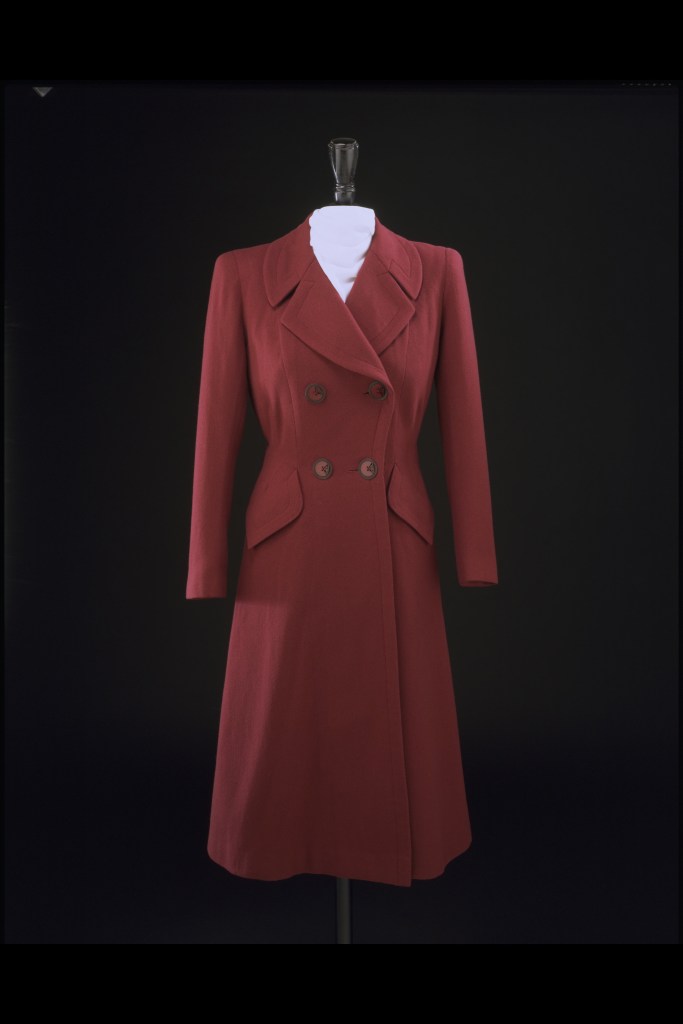
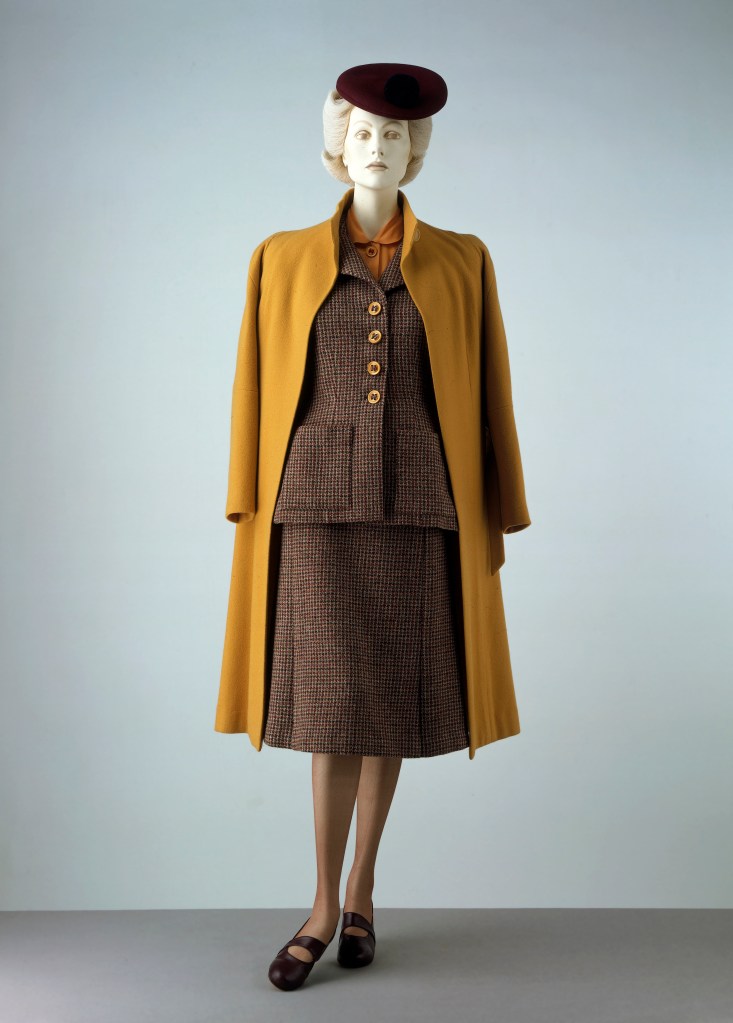
Every last aspect of design was regulated by the Board of Trade. Ornamental and decorative motifs were prohibited, as were any details necessitating an excess of fabric, and the number of pockets, buttons, seams and pleats were restricted.
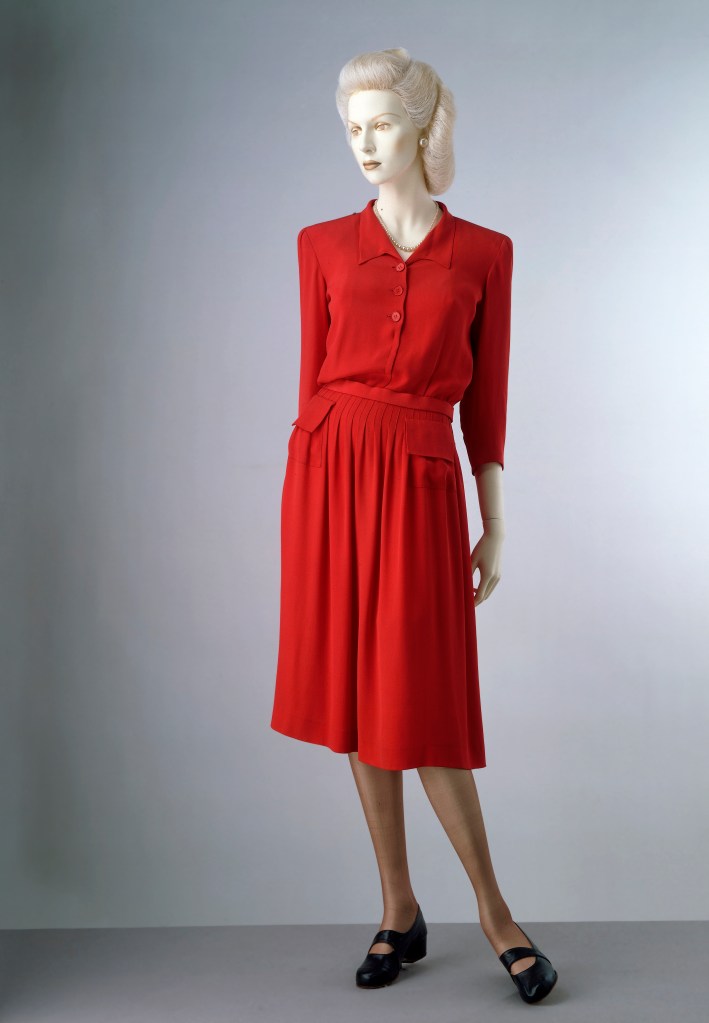
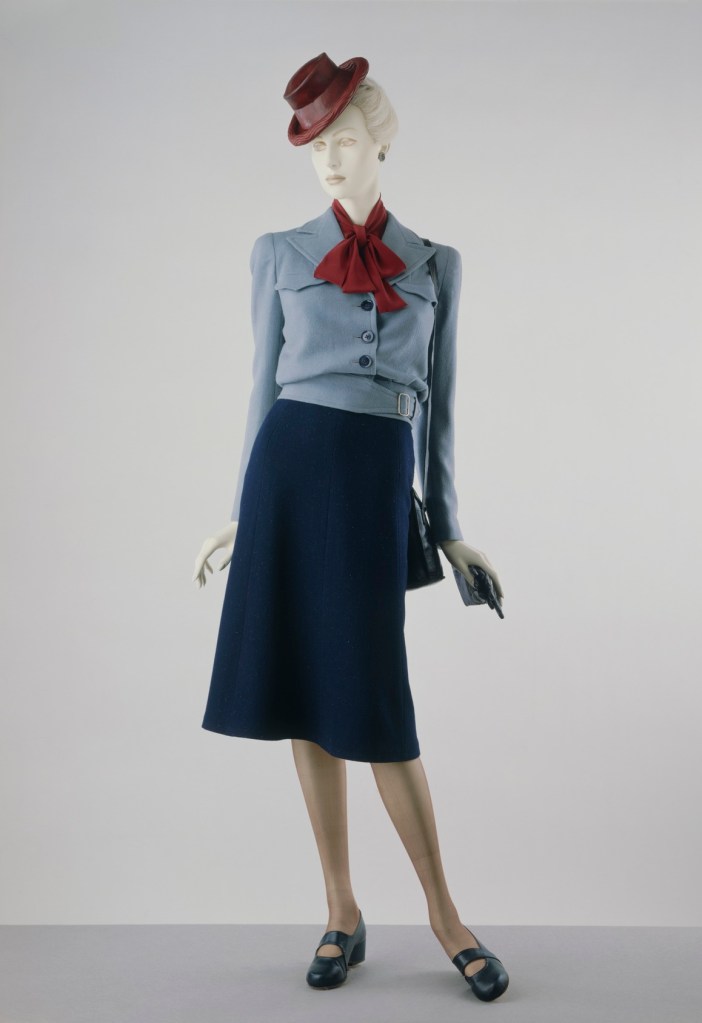
Collections had to be appropriate for mass production, cross seasonal, practical and fashion forward. While take-up of the factory templates for these designs was limited, public perception was positive. Simple elegant cuts with minimal yardage, nipped in waists and higher hemlines would become the epitome of wartime style.
A stitch in time
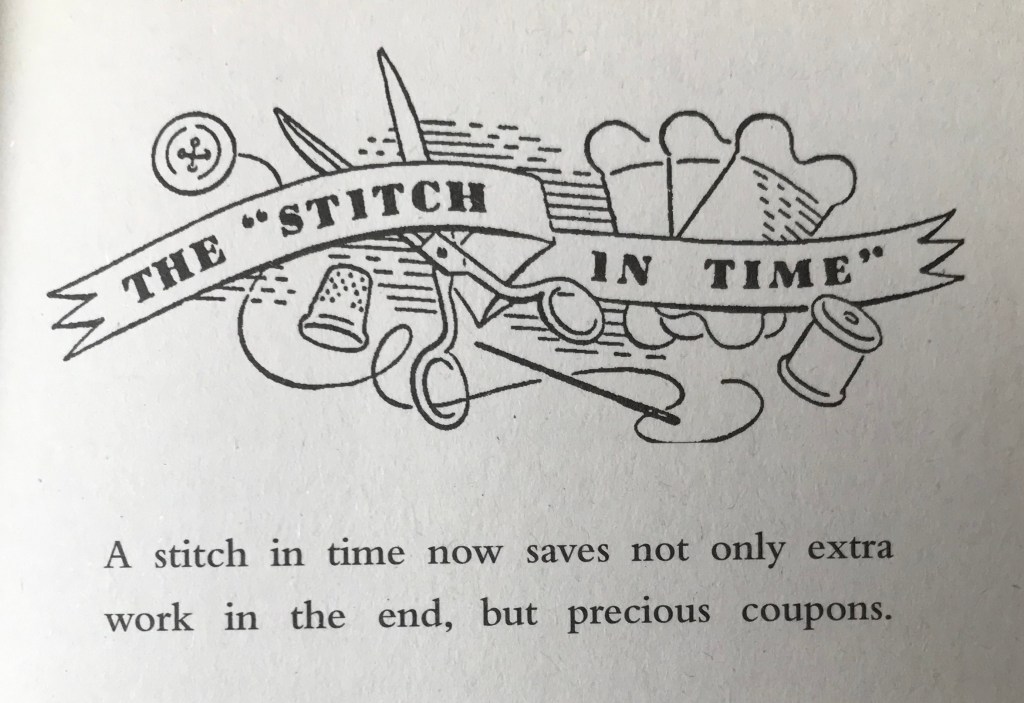
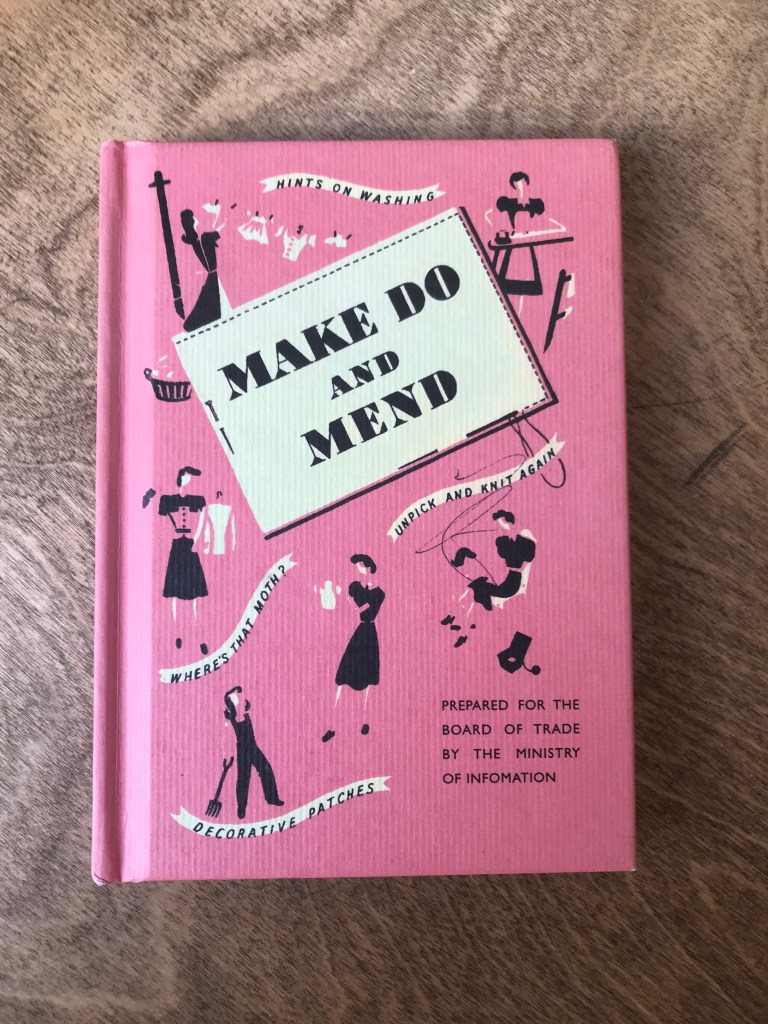
The scarcity of new clothing during the war made sewing a must. Classes to learn everything from repairs to pattern cutting popped up at Technical Institutes and the government issued pamphlets imploring people to get creative. As the Ministry of Information’s 1943 booklet Make Do and Mend eulogised: ‘No material must lie idle, so be a magician and turn old clothes into new. There are almost endless possibilities to be considered once you start looking at old clothes with the idea of remodelling them.’
Mike Brown describes how resourceful home dressmakers recycled and refashioned with whatever fabric came to hand – from blackout material and home furnishings to parachute silk: ‘Utility fabric for dressmaking was available but coupons had to be used as for readymade clothes. In 1944-5, for example, 60 inch-wide cloth was 3.5 to 5 coupons.’ Given a ready-to-wear utility dress might cost 10 coupons, and two yards of fabric off the roll eight, savings were not huge. Dressmakers found better value buying and altering utility garments.
Despite rationing, fashion flourished.
By the end of the war, the appetite for utility clothing waned. The scheme had been a huge success, saving an estimated four million square yards of cotton per year. Yet while utility offered value for money, counterfeit labels and poor quality imitations devalued the system. In March 1949, Harold Wilson ended clothes rationing and coupons became obsolete. Utility production ramped up but standards fell as manufacturers cut corners to achieve profit amidst spiralling costs.
Despite Wilson’s hope utility might become a ‘permanent feature of our economy’, in 1951 the Conservatives revoked the 118 Orders governing the scheme. Although utility continued production until 1952, CC41 was at an end.
Postscript
Fast forward 70 years and Patrick Grant is founding a social enterprise to bring the manufacturing of affordable quality clothing back to Britain and create meaningful work in the process. Through utilising factory downtime and implementing minimalist design principles, Community Clothing embodies many hallmarks of the Utility scheme. What better homage than to reinterpret ‘the cheeses’ for a twenty-first century vision?
We spoke to Patrick about the idea. He explains: ‘The philosophy of Community Clothing… is all about trying to make good quality clothes available at a good price… The philosophy of Utility Clothing was to make good quality clothing available at a good price at a time when rationing and clothing shortages and textile shortages meant that people were profiteering. The motivations are different but the philosophy is the same.’

‘The CC41 logo is also just a very cool iconic logo… So when I was thinking about a logo for Community Clothing it was in my mind, and when I looked into it, it was like – Oh! That trademark lapsed nearly 40 years ago!’
And so, with a few typographical tweaks, Reginald Shipps’ iconic logo lives on – both in the cherished CC41 items that continue to be used to this day, and in a company that embodies many of Utility Clothing’s inspiring values.
Recommended reading…
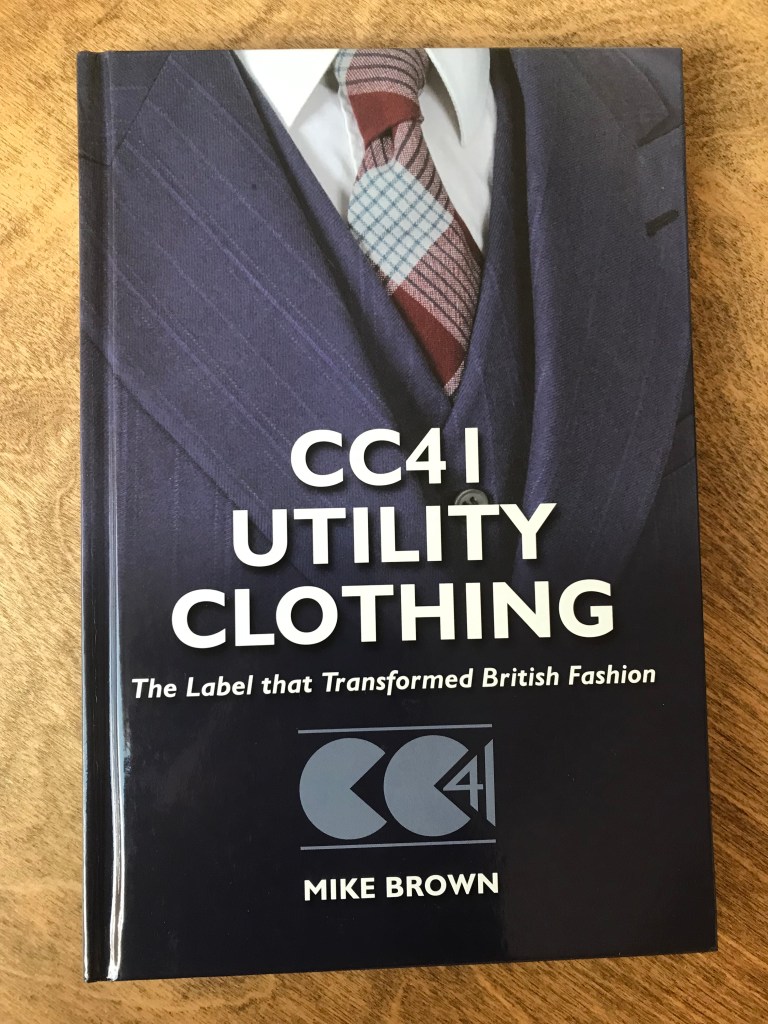
CC41 Utility Clothing: The Label that Transformed British Fashion
Mike Brown, Sabrestorm
This fantastic book outlines the general history of CC41. It’s jam-packed with beautiful colour illustrations, showcasing the changing face of utility wear over the course of the Second World War and shortly afterwards. Brown’s enthusiasm for history and the strange collision of fashion and wartime economics makes for a gripping and speedy read.
Make Do and Mend: Prepared for the Board of Trade by the Ministry of Information
Imperial War Museum reproduction
This lovely little book has been reproduced by the Imperial War museum so we can all take a little dive into history and get a feel for what being a thrifty stitcher really meant when wartime rationing was in place. It’s a fascinating read and something to return to, particularly as we become increasingly aware of the fashion industry’s environmental footprint and our insatiable desire for fast fashion.
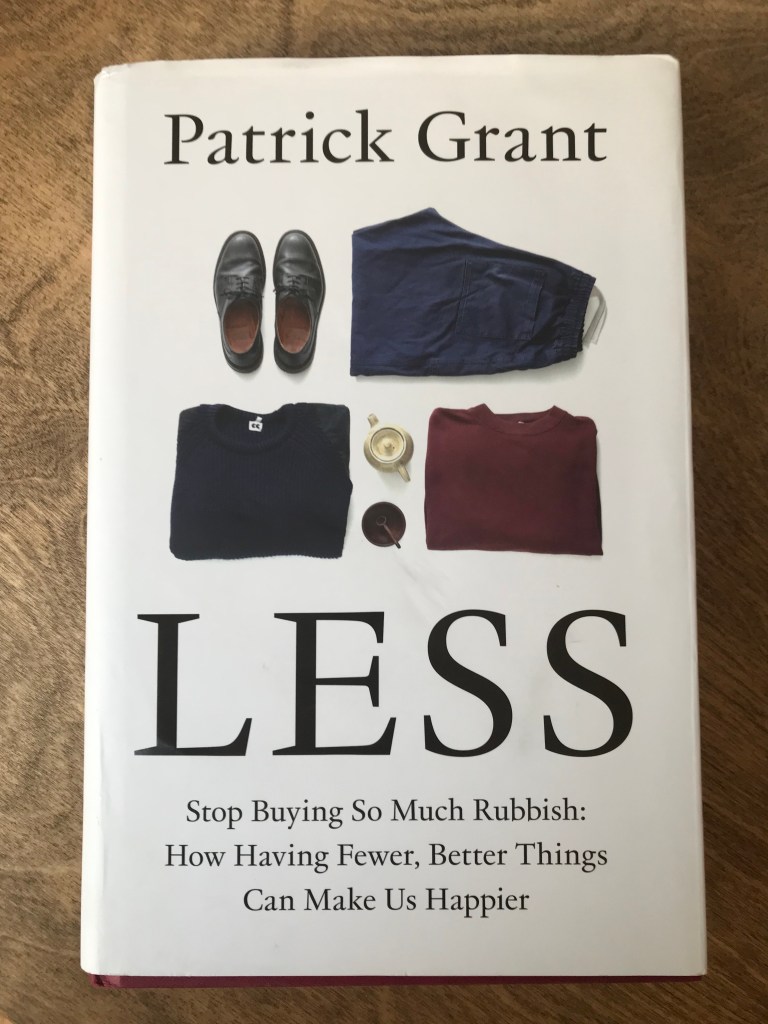
Less: Stop Buying So Much Rubbish: How Having Fewer, Better Things Can Make Us Happier
Patrick Grant, HarperCollins
This book is a tonic. While there is so much written about sustainable fashion these days, this book really gets down to the nuts and bolts of the fashion industry, explains precisely how – and why – it is is flawed, and gives solid ideas as to what we can do about it. Grant outlines an inspiring vision for the future of manufacturing: high quality, local, reasonably priced. Simply put: buy less, better. He’s hitting the mark with his company Community Clothing – read the book for more on how together we can move the dial towards a sustainable fashion ecosystem.
Huge thanks to Mike Brown for sharing his expertise on CC41, much of which informed this short history and to Patrick Grant who spared the time to chat about CC41 for this feature, which originally appeared in Love Sewing magazine in 2024.


