
From underwear to outerwear, keeping warm in winter is something of a fine art. In the north of England, where the chilliest season can whip up regular surprises in the form of absurdly mild or horrendously harsh weather conditions, layering is a necessity. And what better way to layer than with your own home-sewn creations?
When it comes to sewing for winter, there can be a pleasingly low wastage ratio as offcuts from fabrics used for sweaters, coats, and other cosy confections can be readily stashbusted into smaller items like hats, scarves, gloves and lovely little gifts like hot water bottle covers and slippers. Read on for our handy guide on what to sew for a cold snap.
Adorn extremities
The devil is in the detail when it comes to keeping warm. So it makes sense to start with all the things that, in unison, make sure we stay cosy. Hat, scarves and gloves are a given, but since so many of us are feeling the cold in our homes these days, there are a few more suggestions below to keep cosy wherever you are. Given they only use small scraps of fabric, they’re also fairly economical to make.
Slippers
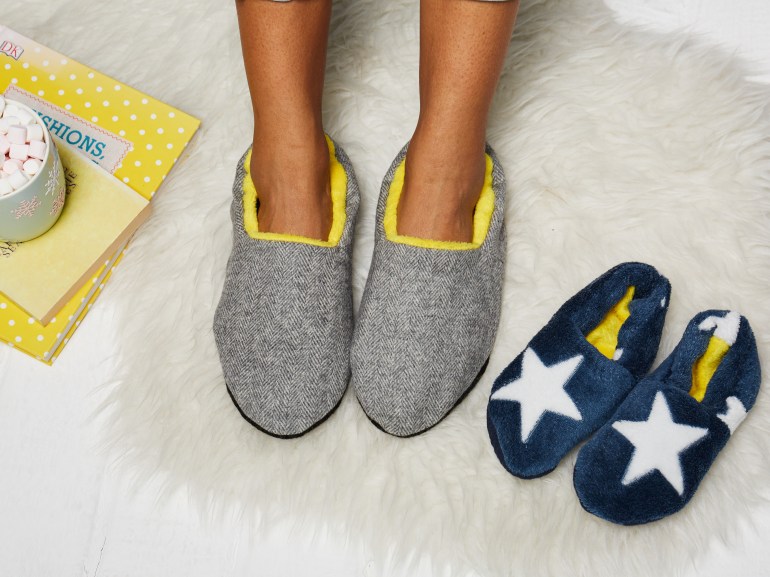
Well of course I couldn’t write a piece on sewing for winter without including my excellent – and free! – DIY slippers pattern.
These slippers are hard wearing, versatile, and mop up all kind of scraps beautifully.
If you don’t have soft terry or fleece fabrics, you can also make them with quilted fabrics, which would add a whole new layer of special-ness to proceedings.
Not only is this a very handy make, and one you can put together for anyone and everyone (so long as they will allow you to draw around their un-shoed foot) it’s also a brilliant scrap buster. And, best of all, these soft-soled toasty toe warmers are perfect for carrying about in your bag, ready to be whipped out when the occasion arises.
Hats
Apparently the old adage that most body heat is lost from the head is a myth. While this leaves me confused (I could swear a head covering makes an enormous difference) I’m unperturbed: if you’re staving off popping the heating on and want a snug little hat for around the house, a quick beanie is an excellent way to use up sweatshirting, fleece and shirling offcuts. In the past I’ve whipped up cosy head-warmers without a pattern by pinning and shaping scraps of cloth around the head, sewing darts to fit and then creating a band to pull it all together. They might not be leave-the-house hats but they do the job.
Gloves
I was a tad disappointed with my first foray into making gloves (using a Vogue pattern – I’ve written about this over on Minerva.com here). I’m sad to report they were a little too baggy around the wrist, with long, creepy ill-fitting fingers. While this was most-likely the result of impatient sewing, the level of fiddliness required to get them right means I’m not sure they are for me.
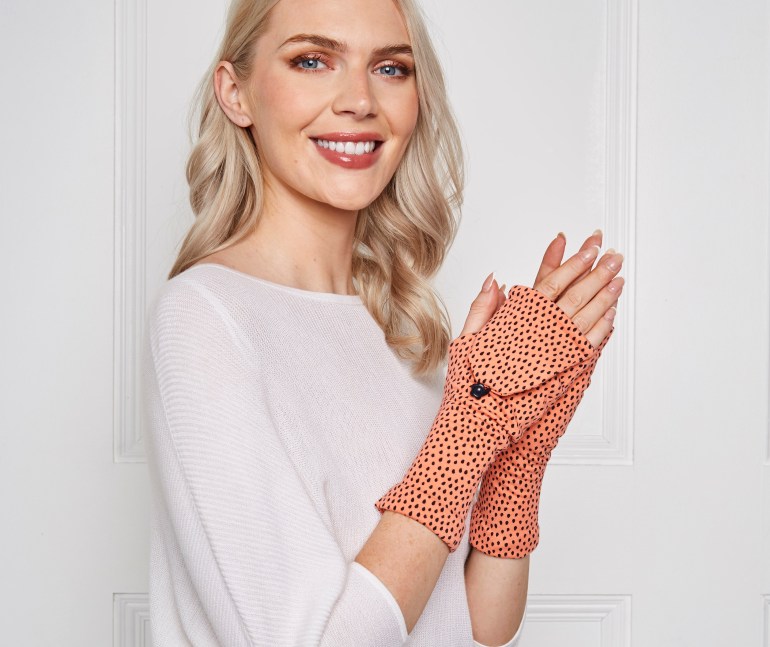
Happily, I designed a fingerless mitten some time ago that has little foldover ends if leaving the house is on the cards. These hand warmers are great if you have busy stitchy fingers but want the extra layer of warmth only something glove-like can give.
I’m giving this pattern away for FREE right now so do check it out – and be sure to subscribe if you choose to download.
Scarves
I’ve made all sorts of scarves over the years using offcuts from dressmaking projects. The absolute best is a simple wool scarf that is still my number one to wear when it’s cold. It was a lightweight 100% wool fabric I’d used to make a 1970s buttonless blazer.
I had a long strip, about 50cm wide, leftover. All I had to do was trim the ends and make sure it was straight. One side was the selvedge, which had a pleasing edge to it. For the other sides, I pinked the edges and then sewed a very neat line of stitching in matching thread close to the pinked edge all the way round. It’s lasted for over five years (and still counting) and even survived one ill-advised trip around the washing machine.
I’ve also made scarves for the kids out of jersey offcuts – simply taking two strips of whatever length is to hand and sewing them wrong sides together leaving a turning gap. Turn right side out, stitch up the gap and voila! A quick and easy scarf for the winter months. I often make these with a matching beanie. For this I recommend the Made for Mermaids free beanie pattern.
Snoods
While I could have tagged snoods in with scarves, it would be rude to do so: the humble snood is worth a paragraph all of its own. For anyone unfamiliar, a snood is a continuous loop of fabric that is fairly snug around the neck – like a pre-tied scarf (though not as voluminous as the infinity scarf) or an open-ended balaclava without all the face holes.
They are usually just about long enough to pull up around the ears – perfect if you’re wearing a hat: together they tick the balaclava box without looking like you’re off to rob the bank. Snoods are a great stashbuster for leftover sweatshirting – that awkward amount when you have a decent stretch but not enough for a garment. I’ll pop a little tutorial on here at some point to show you how to make one – let me know if you’re interested and I’ll hurry up!
Layer up
In search of the ultimate sartorial comfort blanket, I sewed a lot of cosy clothing during the pandemic and, in the process, stumbled upon the following memade layering system. It works!
Base layers
A nice snug fitted vest works wonders under a bundle of other layers in the winter months. I’m a big fan of the Halfmoon Atelier Super Basic Tank which, at the time of writing, is a snip at £4 for the PDF pattern.
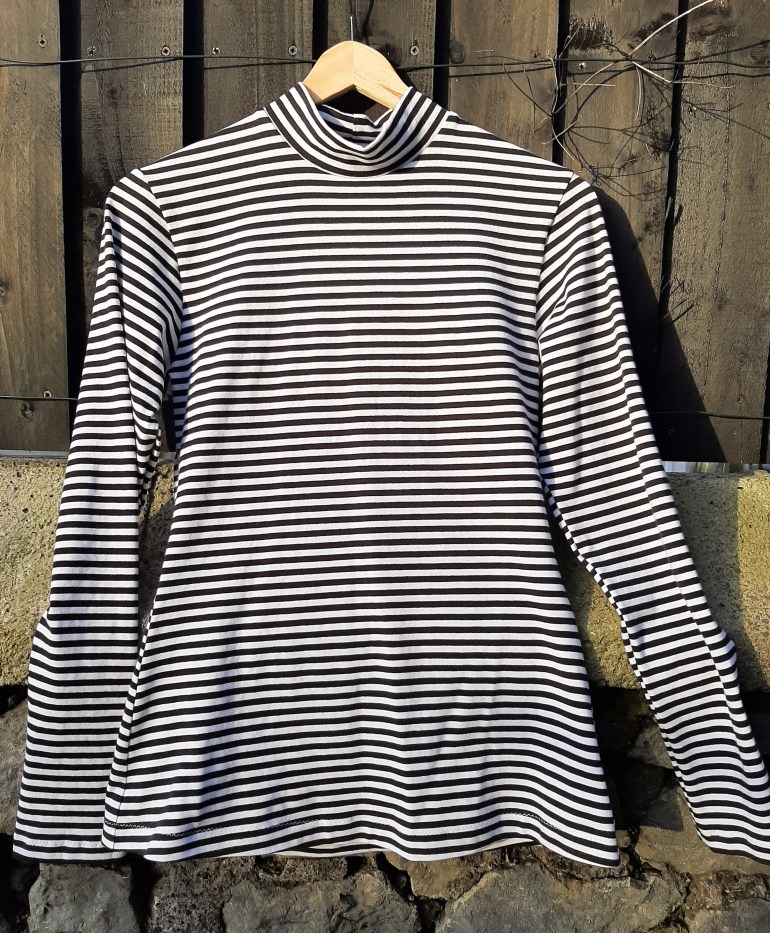
Over the vest I’ll pop a fitted tee – usually a Tilly and the Buttons Stella top with a folded neckline (so it sits neatly under a crew neck sweater) or the Deer and Doe Mockneck (from the Dressed eBook) over a vest.
When it gets extremely cold, I’ll also wear shop-bought thermal leggings underneath jeans and joggers, or thermal tights under winter-friendly skirts.
There are plenty of leggings patterns on the market, but finding the right fabric to make them in (thermal, lightweight, stretchy and breathable) can be tricky and, unfortunately, quite expensive.
Mid-layers
I like a long-sleeve tee that’s a bit looser and relaxed, usually worn over a base layer (or two!). My favourite is the Mandy Boat Tee, a free pattern from Tessuti Fabrics. I usually widen the sleeves a little as they’re a fairly snug fit.
I also like the Tilly and the Buttons Tabitha T-shirt (from her Make it Simple book) – the long-sleeve version is great for layering under crew-neck sweaters.
For sweaters, two current favourites are the Cosmos Sweatshirt by Sew House Seven (read about one of the many here) and the Lynn Sweater by Bobbins and Buttons (I wrote about this for Bobbins and Buttons here).
Both are raglan cut, with the Lynn being more of a classic sweatshirt style and the Cosmos a cropped boxy style.
I also like Sew House Seven’s Toaster Sweater, which has a drop sleeve. The Cosmos has a variation that creates a fairly fitted funnel neck, which is great over a mockneck base layer for extra toastiness.
Most of these are made from sweatshirting, though I did make a couple of funnel necked Toaster Sweaters out of a really chunky fleece, and when it’s very cold I layer one of those over the top of the sweatshirt. Yes, that means I can often be found in at least four layers before I’ve even considered ‘the housecoat’…
Top layers
If cardigans are your thing, you can read about my many escapades with the True Bias Marlo Sweater here and here. Unfortunately I still haven’t got round to knitting one.
Before I get to outerwear (possibly my favourite type of winter weather sewing project), I couldn’t miss out the all-important housecoat as a layering option. I’ve made a few of these over the years, the best being from a vintage pattern where the sleeve is cut in the same piece as the body.
They’re about hip length and have a round lapel that can be turned up and wrapped around the neck for warmth, patch pockets and a tie belt. I’ve made them out of fleece, quilted sweatshirting and faux fur and they are brilliant to throw on around the house. They operate in much the same way as a dressing gown but look a little more presentable should the doorbell ring.
A final coat
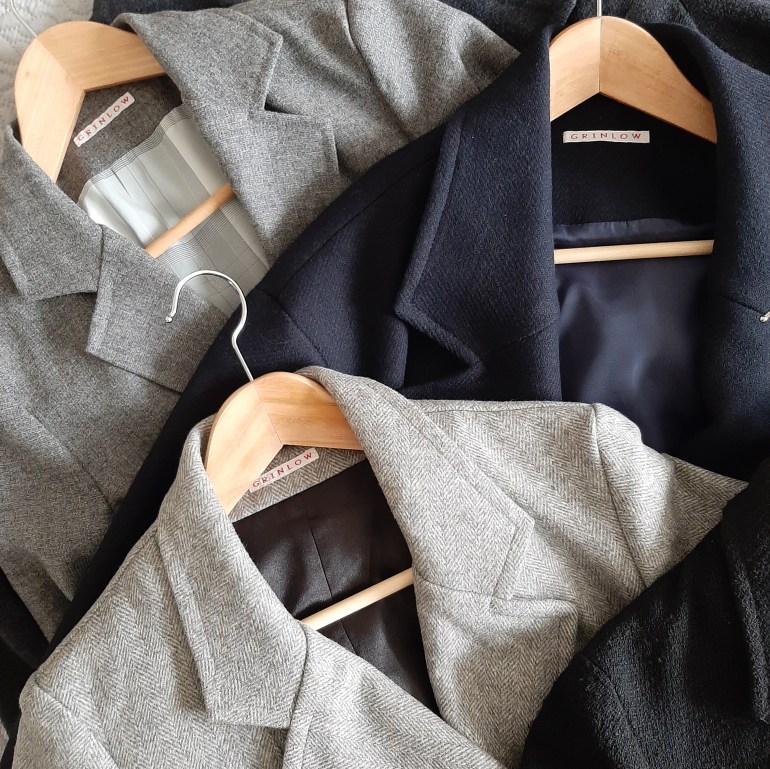
Obviously at some point you’re going to have to leave the house and (in northern England, at least) the coat becomes a non-negotiable. I’ve made a lot of coats over the years and I love wearing them as much as making them. Nothing beats a cosy wool overcoat on a crisp winter’s day, layered up over wooly scarves, sweaters and mittens.
I have a few gorgeous coats which are very dressy but alas, my life is not so flash, and so they sit patiently awaiting more wear. If you’re not convinced about sewing your own outerwear, I’ve written about six reasons to love sewing coats here. One big plus, for me, is being able to sew vintage styles that fit perfectly (no shrunken sleeves or unbuttonable mid-sections). Find out more about sewing vintage coats here.
My go-to coats these days are waterproofs, on regular rotation for the school run (I don’t drive so it’s all-weathers walking). I started out with one waterproof parka (a pattern-hacked waver jacket – read about how I made this here) which did the job but wasn’t quite warm enough in winter. So I upgraded with a second, this time using Thinsulate interlining and a shirling lining for the body and hood. It’s very hard to swap this out for the wool coats, even when it isn’t raining.

Coats may be fun to make, but is it worth it? I wrote about whether it’s cheaper to make a coat than to buy one here and – a few years and a lot of inflation later – I would still say, at a stretch, yes (if you go for cheaper fabrics). But the truth is, if you go to town on it, you will pay more than high street for the coat.
That said, I sometimes pop into our local high street stores and feel the coats (yes I really do) just to gauge the quality. The tailored styles are always made from synthetics which, aside from the environmental issues, are just not a patch on wool. They are rarely if ever interlined and have no weight (or warmth) to them.
Of course, not everything boils down to cost alone; making your own means you get a high-end coat for a high street price AND you know who made it.
Blankets
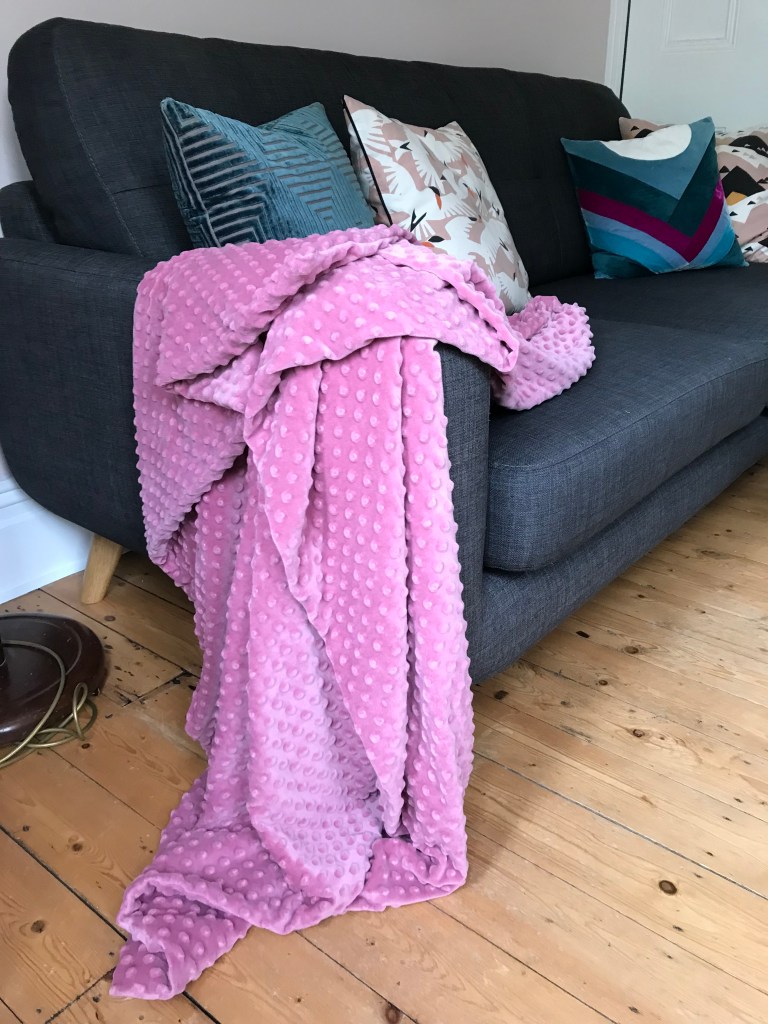
If all else fails, you can’t beat a cosy blanket to throw over yourself and your loved ones when temperatures drop. I have a go-to blanket I make in dimple fleece, it’s luxuriously soft and very cosy.
It takes about half an hour to make and can be sewn up on the sewing machine and finished quickly with needle and thread.
I’ll share more on these another time, but for now you can get all the info over at Minerva.com here.
To be the first to hear about new features, sewing patterns and tutorials from Grinlow Studio, subscribe today!

 Grinlow Studio